


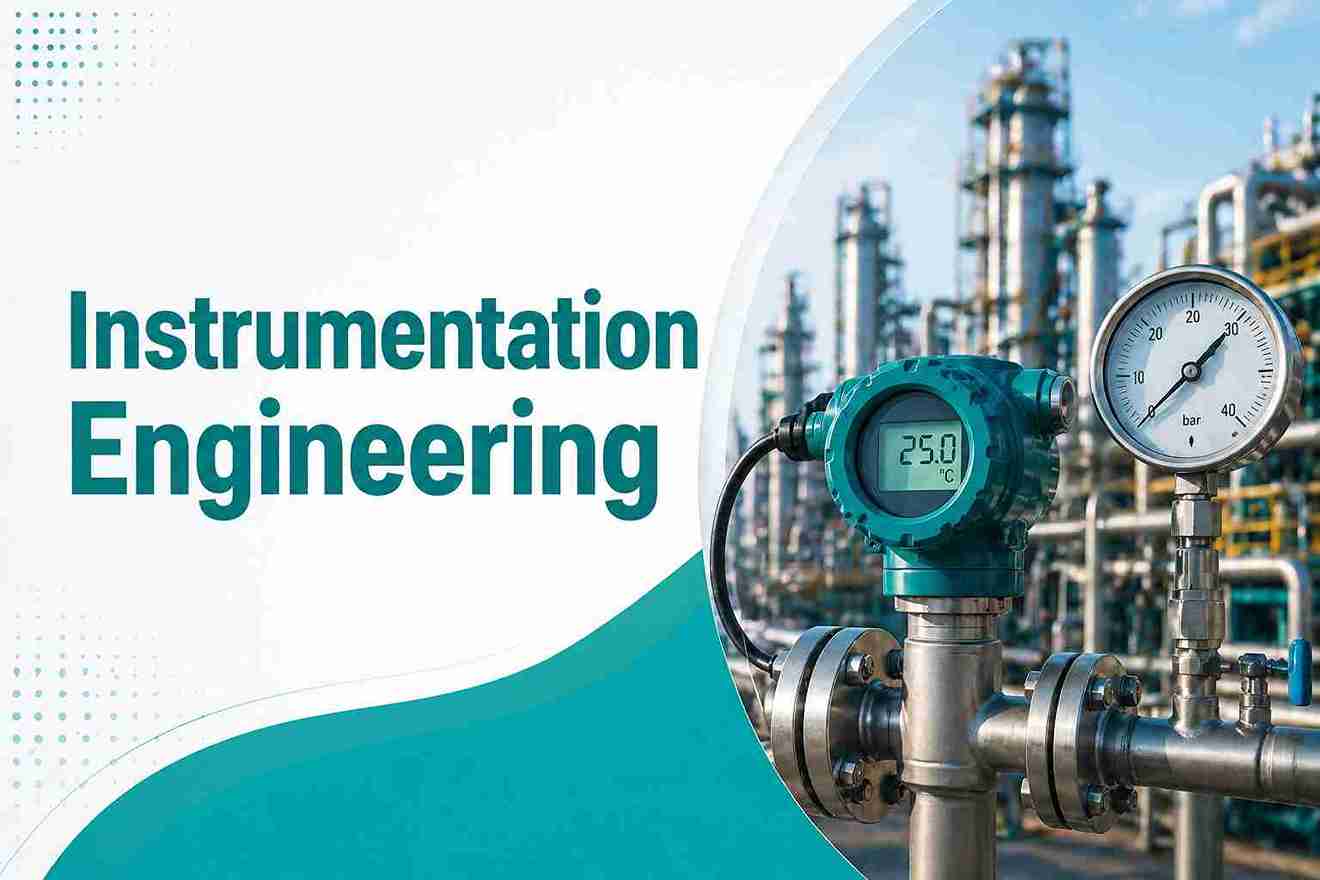
While exploring career options you have probably come across the term instrumentation engineering and wondered what it actually means. It sounds technical, right? But the idea is quite simple. It is all about how machines and systems are monitored and controlled so that they work properly and safely.
From factories and power plants to medical equipment, instrumentation engineering plays a role in making sure everything runs smoothly without errors.
In this blog, we will break it down in a simple way so you can understand what this field is all about and whether it is the right career choice for you.
What Is Instrumentation Engineering?
Instrumentation engineering is the branch of engineering that deals with measuring and controlling systems. In simple words, it focuses on tracking things like temperature, pressure, flow and speed, and making sure these stay within the correct limits.
It is also closely connected to automation, where systems use sensors and controllers to monitor processes and automatically adjust them when needed. This helps improve efficiency, accuracy and safety.
For example, in a factory, machines use sensors to measure temperature or pressure. If something goes wrong, the system can automatically adjust or alert operators. This entire process is managed through instrumentation.
It combines concepts from electronics, control systems and automation to ensure that systems work efficiently and safely.
How Does Instrumentation Engineering Work?
Instrumentation engineering works through a combination of sensors, controllers and systems that continuously monitor processes.
Here’s a simple way to understand it:
- Sensors collect data (like temperature or pressure)
- Controllers analyse that data
- Systems take action if something goes outside the set limit
This cycle keeps repeating to maintain smooth operations.
What Does an Instrumentation Engineer Do?
An instrumentation engineer is responsible for ensuring that systems and equipment function correctly. Their work typically includes:
- Designing and developing control systems
- Installing and maintaining instruments
- Monitoring system performance
- Troubleshooting faults
- Ensuring safety and accuracy
Their role usually involves designing, installing and maintaining systems that control industrial processes.
Where Is Instrumentation Engineering Used?
This field is used across multiple industries where monitoring and control are important. Some common areas include:
- Manufacturing industries
- Oil and gas sector
- Power plants
- Chemical and pharmaceutical industries
- Automotive sector
- Healthcare and medical equipment
This wide usage makes it a stable and in-demand career option.
Skills Required for Instrumentation Engineering
To do well in this field, you need a mix of technical and practical skills. Some key skills include:
- Understanding of electronics and control systems
- Problem-solving ability
- Attention to detail
- Basic knowledge of automation and sensors
- Analytical thinking
Along with technical skills, strong soft skills like communication and time management are equally important in this field.
Courses And Qualifications Required
To enter this field, you can pursue:
- B.Tech/B.E. in Instrumentation Engineering
- Electronics and Instrumentation Engineering
- Electrical and Electronics Engineering
Diploma courses are also available for entry-level roles.
Career Scope And Opportunities
Instrumentation engineering offers good career opportunities due to its demand across industries.
Some common job roles include:
- Instrumentation Engineer
- Control Systems Engineer
- Automation Engineer
- Maintenance Engineer
- Project Engineer
With experience, you can move into senior roles or specialize in automation.
Read: Tools For Project Analysis
Career Path In Instrumentation Engineering
If you are starting out in instrumentation engineering, your career usually grows step by step as you gain experience and practical exposure.
You typically begin with entry-level roles where you learn how systems and equipment work in real environments. Over time, you move into more specialised and senior positions.
Here’s how a common career path looks:
1) Entry-Level (0–2 years): Trainee Engineer / Junior Instrumentation Engineer
→ Focus on learning basics, assisting in installation, maintenance, and monitoring
2) Mid-Level (2–5 years): Instrumentation Engineer / Maintenance Engineer
→ Handle systems independently, troubleshoot issues, ensure smooth operations
3) Advanced Roles (5–10 years): Senior Engineer / Control Systems Engineer / Automation Engineer
→ Work on system design, automation, and process optimization
4) Senior Level (10+ years): Project Manager / Plant Manager / Technical Specialist
→ Lead teams, manage projects, and oversee large-scale operations
As you grow, you can also specialize in areas like automation, robotics, or industrial control systems, which can further improve your career opportunities and salary.
Salary Of An Instrumentation Engineer In India
Salary in this field mainly depends on experience, skills, and industry.
- Freshers: ₹2.5 – ₹4 LPA
- Mid-level (2–5 years): ₹4 – ₹8 LPA
- Experienced (5+ years): ₹8 – ₹15 LPA+
Industries like oil & gas, power plants and automation generally offer higher salaries compared to others.
Why Choose Instrumentation Engineering?
This field is a good option if you enjoy working with systems, machines, and problem-solving. Some reasons to consider it:
- High demand across industries
- Opportunities in automation and technology
- Good career growth
- Work on critical systems
Conclusion
Instrumentation engineering is a field that focuses on making systems more reliable, efficient and safe. With its use across industries like manufacturing, power and healthcare, it offers strong career opportunities and steady growth, especially as automation continues to expand.
If you are interested in working with systems, improving processes and solving practical problems, this field can be a solid and future-ready career choice.
FAQs
1. What is instrumentation engineering in simple words?
It is about measuring and controlling systems so they run safely and correctly.
2. What kind of work does an instrumentation engineer do daily?
They monitor systems, check instruments, fix issues, and ensure machines are working properly.
3. Is instrumentation engineering a good career in India?
Yes, it offers stable jobs across industries like manufacturing, oil & gas, and power, with good growth over time.
4. What is the starting salary of an instrumentation engineer?
Freshers usually earn between ₹2.5 – 4 LPA, depending on skills and company.
5. Which is better: electrical or instrumentation engineering?
Both are good. Instrumentation focuses more on control systems and automation, while electrical focuses on power systems. Choose which fits your skills more.
6. Do instrumentation engineers need coding?
Basic coding can help in automation roles, but many jobs do not require advanced programming.
7. Can I get a job after a diploma in instrumentation engineering?
Yes, diploma holders can start with technician or junior roles and grow with experience.
8. Is instrumentation engineering hard to study?
It can feel technical at first, but becomes easier with practice and understanding of concepts.
9. What industries hire instrumentation engineers the most?
Industries like oil & gas, manufacturing, power plants, and pharmaceuticals hire the most.
10. What are the career options after instrumentation engineering?
You can work in roles like instrumentation engineer, automation engineer, or control systems engineer.
11. Does instrumentation engineering have a future?
Yes, with increasing automation and smart systems, demand for this field is growing.
12. What should I study to become an instrumentation engineer?
You can pursue a degree or diploma in instrumentation, electronics, or related fields.




 Facebook
 Instagram
 Twitter




