


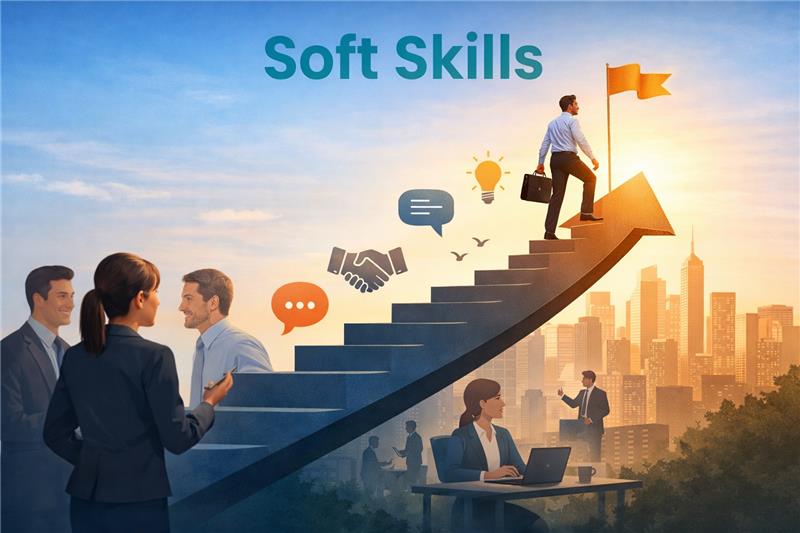
That promotion you’ve been waiting for? It might not come from working harder or knowing more. So, what’s really making the difference? Well, it’s something most people completely overlook: Soft skills. And once you start noticing it, you will see it everywhere.
For instance, think about the last time someone in your team got promoted. Were they the smartest person in the room? the most experienced? or were they simply… easier to work with? more confident in meetings? better at handling pressure without pulling everyone else down?
That is not luck. That is soft skills doing exactly what they are meant to do. Quietly and consistently, in the background of everyday interactions, they build your reputation. And that reputation is what leads to the next role, the next raise and the next opportunity.
The good news here? These are not personality traits you either have or don’t. They are skills! Which means they can be learned and improved over time. So, if you have been doing good work and still feel like your growth is slower than it should be, keep reading. This blog is for you.
What Are Soft Skills?
Soft skills are simply the way you behave at work. Not what you studied and not which software you know, but how you talk to people, handle tough situations, make your teammates feel, and whether your manager can trust you to get things done without constant follow-ups.
Things like staying calm under pressure, listening actively, owning your mistakes and being easy to work with, all of this comes under soft skills.
And why do they matter? Because companies don’t just hire qualifications, they hire people. Candidates who are reliable, easy to communicate with, and good to work with tend to grow faster, earn more trust and are often the first ones considered when better opportunities come up.
Hard Skills Vs Soft Skills: What Is The Difference?
Hard skills are technical abilities like managing accounts, operating machinery, writing code and handling data entry. They can be learned through training and are relatively easy to measure and test.
Soft skills on the other hand are behavioural abilities like how you speak to a stressed colleague, how you respond when a deadline moves up suddenly, and whether you follow through on what you said you will do. It is harder to put on paper, but impossible to ignore in a real workplace.
| Category | Hard Skills | Soft Skills |
| What They Cover? | Technical knowledge | Personal behaviour & people skills |
| Examples | Accounting, coding, data entry | Communication, patience, teamwork |
| How They Are Built? | Courses, degrees, training | Experience, reflection, daily practice |
| Are They Measurable? | Yes | Not always, but very visible |
| Where Do They Apply | Specific roles | Every role, every situation |
How Soft Skills Influence Your Career At Every Stage?
Here is how it actually plays out at work:
At The Interview Stage
Before you even get the job, soft skills are being evaluated from the moment you walk in. The way you introduce yourself confidently, how clearly you answer questions and whether you come across as someone easy to work with. These things decide the outcome, even more than your technical answers.
Day To Day On The Job
strong communication skills mean fewer misunderstandings, faster execution, better relationships with your team and your clients. Solid self-management skills mean your manager does not have to follow up with you repeatedly. Over time, these things build your reputation quietly, and reputation is what promotions are made of.
When It Is Time For Promotion
Managers are not just asking whether you can do the current job well. They are asking whether you are ready for more or not. Can you handle a team? Can you represent the company in front of a client? Can you stay steady when things get messy? Every one of these is a soft skills question.
At Senior And Leadership Levels
The higher you go, the less the job is about technical execution and the more it is about people which requires soft skills such as, managing teams, making decisions under pressure, and keeping everyone aligned and motivated.
Key Soft Skills Essential For Career Growth
1. Communication Skills: Every interaction you have at the workplace involves communication. Every email, every meeting and every feedback conversation. Whether you are explaining something, convincing someone or asking for support, how you communicate makes all the difference.
Having said that, strong communication skills are not just about speaking in perfect English or sounding impressive. They are about being clear, being understood and knowing how to adjust your tone depending on who you are speaking to. For instance, when you speak to a client, the tone and sound is different from when you speak to a teammate, and understanding that difference is half the job.
It also goes beyond words. Your eye contact, posture, and facial expressions all play a role. Verbal and non-verbal communication together tell the full story and often, your body language has already said something before you even speak.
2. Listening Skills: Ask anyone if they are a good listener and they will say yes. Watch them in a conversation and you will usually see them mentally preparing their next point while the other person is still mid-sentence. But, do you think that is a good listening skill? No.
Because real listening skills mean being fully present, not just physically in the room but genuinely paying attention. When you truly listen, you catch things others miss. You ask smarter questions, you avoid the kind of costly errors that come from half-heard instructions, and most importantly you make people feel heard which builds more trust at work than most people realise.
3. Emotional Intelligence: Every workplace has pressure like difficult clients, moving deadlines, stressed managers, teammates having a rough time. It is all part of the deal. But the question is never whether tough situations will come up or not, but how you handle yourself when they do.
Emotional intelligence is about understanding your own emotions well enough to not let them take over, and also being aware of others’ emotions so you can respond thoughtfully instead of reacting impulsively. It is what stops you from firing back at a frustrating message. It is what helps you notice when a colleague is struggling even before they say a word. In leadership, this isn’t a bonus skill but it’s the job.
4. Decision-Making: Every role involves decisions – some small, some with real consequences. The professionals who think clearly and act decisively, even under pressure, are the ones who get trusted with more responsibility faster.
Strong decision-making skills does not mean always getting it right. It means approaching problems with a clear head, considering what you know and moving forward without needing someone to hold your hand every single time. That kind of confidence is noticed and rewarded.
5. Self-Management: Nobody wants to manage an adult. Blunt, but true. Managers do not want to follow up three times on a basic task or wonder every morning whether you will meet your deadline.
Self-management skills are about owning your time, your priorities and your behaviour at work, showing up prepared, following through without being reminded, and staying composed when things pile up. These build your reputation quietly. And that reputation is what gets you noticed when a better role opens up.
6. Leadership: Showing leadership qualities means taking ownership of a problem even when it is not technically yours to solve. It is about staying solution-focused when others are panicking and becoming someone your team naturally looks to for direction.
Start doing this at any level, and it won’t go unnoticed.. And once you do step into a leadership role, understanding different leadership styles helps you bring out the best in different kinds of people, which, at that point, is essentially the whole job.
7. Integrity: Every workplace eventually figures out who says the right things and who actually does them. It does not take long.
Integrity at work is simple – Just be honest, keep your word, own your mistakes instead of quietly passing the blame and treat people decently no matter what their designation is. Simple in theory but rare in practice. And when you combine it with a genuine commitment and consistent effort every time, not just when someone is watching you is what sets you apart.
8. Adaptability: Tools change. Teams change. Processes change. The people who dig their heels in and resist every change become a friction point and everyone knows it. The people who adjust quickly, stay useful through transitions and keep a positive attitude through uncertainty become the ones companies hold on to tightest.
How To Build Soft Skills?
Reading about soft skills does not build them. Here is what actually does:
- Get specific about what needs work
- Turn your everyday work into practice
- Ask someone for honest feedback
- Observe the people who already do it well
Salary And Career Scope
Soft skills do not appear on your offer letter as a separate line. But they influence what that number turns out to be.
Professionals with strong communication and interpersonal skills often earn higher than peers with matching technical profiles. At mid and senior levels, this gap can typically range between 20–30%. In roles like sales, customer support, HR and business development, soft skills are not just a supporting requirement but the core requirement of the job.
As you move into senior roles, the gap between people with strong soft skills and those without it continues to grow wider. Because at that level, the job role is largely about managing people, making decisions and handling complexity. And those who understand people, tend to go the furthest.
Conclusion
Soft skills are not “nice to have” anymore. In today’s job market, they are what separate those who stay stuck from those who keep growing. The ability to communicate well, handle pressure with maturity, take ownership and work genuinely well with others, these are the qualities managers notice, remember, and reward.
The best part? You do not need a new degree or an expensive course to start. You just need to be intentional about how you show up every single day. Small changes in how you listen, how you respond and how you carry yourself at work add up faster than you think, and before long, that next promotion will not feel far away at all.
FAQs
1. Do I need a degree to build soft skills?
No. Soft skills are built through experience, practice, and daily effort, not a classroom. Anyone can develop them, regardless of their educational background.
2. What are soft skills in simple words?
They are how you behave at work, how you communicate, handle pressure, work with others, and show up consistently. Not what you know, but how you operate.
3. Are soft skills more important than technical skills?
Both matter, but soft skills often decide how far you grow. Technical skills get you hired but soft skills can get you promoted.
4. Can soft skills actually be learned?
Absolutely. Nobody is born a great communicator or a calm leader. It takes practice, honest feedback and a willingness to improve.
5. I am a fresher with no experience. Where do I start?
Start with every group situation around you, college projects, internships and part-time work, and focus on how you show up in interviews. That already counts.
6. How do I show soft skills on my resume?
Through examples, not claims. Show what you did, not just what you are “good at.”
7. Why am I getting passed over for promotions despite good work?
Usually it comes down to how you communicate, take initiative, and handle pressure. Those are soft skill gaps and all of them can be fixed.
8. How long does it take to improve?
Small changes show in weeks. Real and lasting improvement takes consistent effort over months. But the career payoff is worth every bit of it.
9. Do Indian companies assess soft skills during hiring?
Yes, increasingly. Behavioural rounds, group discussions and situational questions are now common across most industries.
10. I struggle with confidence. Is that a soft skill issue?
Yes and the good news is confidence grows when you build the skills underneath it. Work on communication and self-awareness first, and confidence follows.



 Facebook
 Instagram
 Twitter




