


Have you ever finished a task only to hear, “No, that is not what I asked for”?
You thought you understood the instructions, but your colleague or manager meant something else/different. This is a common example of miscommunication at work. It can happen during a quick conversation, phone call, a meeting or even a simple chat message.
Miscommunication does not always mean that someone or you communicated badly. Sometimes, the message is clear but can be understood differently by another. But, if not addressed, it can lead to wrong work, missed deadlines, repeated work or unhappy customers.
In this guide, we will explain why miscommunication happens and how to handle miscommunication at the workplace.
What Is Miscommunication At Work?
Miscommunication at work happens when a message is not understood in the way it was intended. It can happen between co-workers, managers, customers or different teams.
A misunderstanding is often the result of miscommunication. For example, a manager may ask an employee to complete a task “soon”. The employee may think it means by the end of the day while the manager expects it within an hour. Here, the message was the same, but both the parties had different understanding of what “soon” meant.
Read: Organizational Communication Barriers
Reasons For Miscommunication At Work
Some common reasons for miscommunication in the workplace:
1. Unclear Instructions
Sometimes, instructions are too short or do not give enough details. The person receiving them may not know exactly what to do, when to finish it or what result is expected.
For example, a manager says, “Send me the report soon.” The employee may think they have the whole day, while the manager may expect it within an hour.
2. Not Listening Properly
A conversation can lead to misunderstanding when someone is not paying full attention. They may hear only part of what was said and miss an important detail.
For example, an employee may listen to the task but miss the deadline mentioned at the end of the conversation.
Read: Listening Skills For Freshers And Job Seekers
3. Assuming Instead Of Asking
People sometimes assume the missing information on their own. They may think they know what someone meant and start working without checking.
For example, two co-workers may both assume that the other person will call the customer. The call is then missed because neither person takes responsibility.
4. Choosing The Wrong Way To Communicate
The way a message is communicated can affect how well it is understood. A short message may work for a simple update. But detailed work instructions may be explained better with a call or face-to-face conversation.
For example, sending a long list of instructions through a quick chat message can make it easy for someone to miss an important point.
5. Language Or Word Differences
People at work may have different levels of comfort with a language. Difficult words, technical terms or unfamiliar phrases can make a message harder to understand.
For example, a new employee may not understand a technical term used by a senior employee and may complete the task incorrectly.
6. Distractions During Work
A busy workplace can make it hard to focus. Noise, phone calls, customers or other tasks can take attention away from a conversation.
For example, an employee helping a customer may not hear the full instruction given by a co-worker.
7. Different Perceptions
Sometimes, two people hear the same words and sentences spoken by a manager or co worker, but interpret the situation differently because of their experiences, expectations or perception. This is where communication and interpersonal skills can help you understand how others may interpret a message.
For example, a manager may give short feedback because he/she is in a hurry, while an employee may perceive the same tone as dissatisfaction with their work.
Read: Soft Skills Required For A Professional
8. Not Checking If The Message Was Understood
Often at the workplace, a person may explain something clearly but never check whether the other person understood it. This can leave confusion unnoticed until the work is affected.
For example, before starting a task, an employee may repeat the main instructions or confirm about the deadline. This simple check can prevent mistakes later.
Tips To Handle Miscommunication At Work
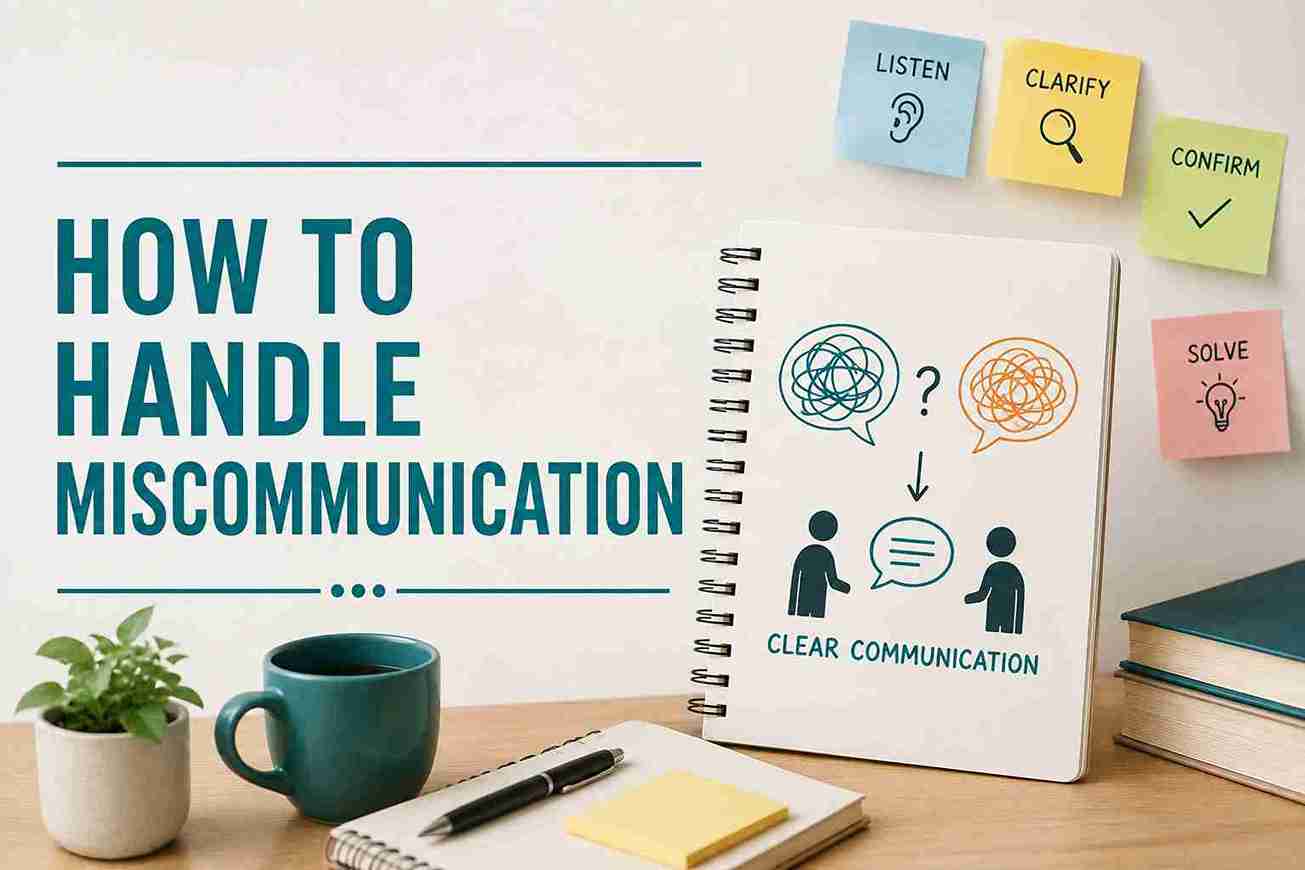
Miscommunication does not always need to become a serious problem. The way you respond can help clear up confusion and prevent the same issue from happening again.
1. Stay Calm And Listen
Do not react immediately when you realise there is a misunderstanding. Listen to what the other person is trying to say and understand where the confusion started.
2. Ask Questions
If something is not clear, ask instead of guessing. A simple question can save time and prevent the wrong work from being done.
3. Explain What You Meant
If your message was misunderstood, explain it again in simple words. Focus on what you wanted to say instead of blaming the other person.
4. Confirm Important Details
For tasks involving deadlines, payments or important work, repeat the key details. This makes sure both people have the same understanding.
5. Use Clear And Simple Words
Avoid unnecessary jargon or complicated sentences. Say what needs to be done, who needs to do it and when it needs to be completed.
6. Follow Up When Needed
If the conversation involves an important task, a short follow-up message can help. It gives everyone a clear record of what was discussed and what needs to happen next.
Related Reading: How To Improve Communication Skills?
Conclusion
Workplace miscommunication can happen even when people are trying to communicate clearly. However, the important thing is to address the doubts instead of making unnecessary assumptions. Asking a quick question, listening carefully, explaining your point clearly and confirming important details can help prevent misunderstandings from becoming bigger problems.
Good communication is not about always saying the perfect thing. It is about making sure the other person understands what you mean. At work, sometimes the simplest conversation can make the biggest difference.
FAQs
Q1. What is an example of miscommunication at work?
A manager gives an unclear deadline, and the employee understands it differently. This can lead to confusion or a delay in completing the task.
Q2. What are the common causes of miscommunication at work?
Unclear instructions, poor listening, assumptions, distractions and language differences are common causes.
Q3. How can I avoid miscommunication at work?
Listen carefully, ask questions and confirm important details before starting a task.
Q4. How do you deal with a misunderstanding at work?
Stay calm, understand the issue and explain your point clearly.
Q5. Why is clear communication important at work?
Clear communication can help avoid mistakes, confusion, rework and delays at work.
Q6. How can I clarify a message at work?
Ask a simple question or repeat what you understood to confirm it.
Q7. What should I do if my colleague misunderstands me?
Explain what you meant clearly and avoid blaming the other person.
Q8. How can miscommunication affect work?
It can cause mistakes, delays, repeated work, confusion and problems with customers or other teams.
Q9. Is miscommunication common in the workplace?
Yes. Miscommunication can happen when people understand the same message differently.
Q10. How can I communicate better with my colleagues?
Listen carefully, use simple words and ask when something is unclear.






 Facebook
 Instagram
 Twitter




