


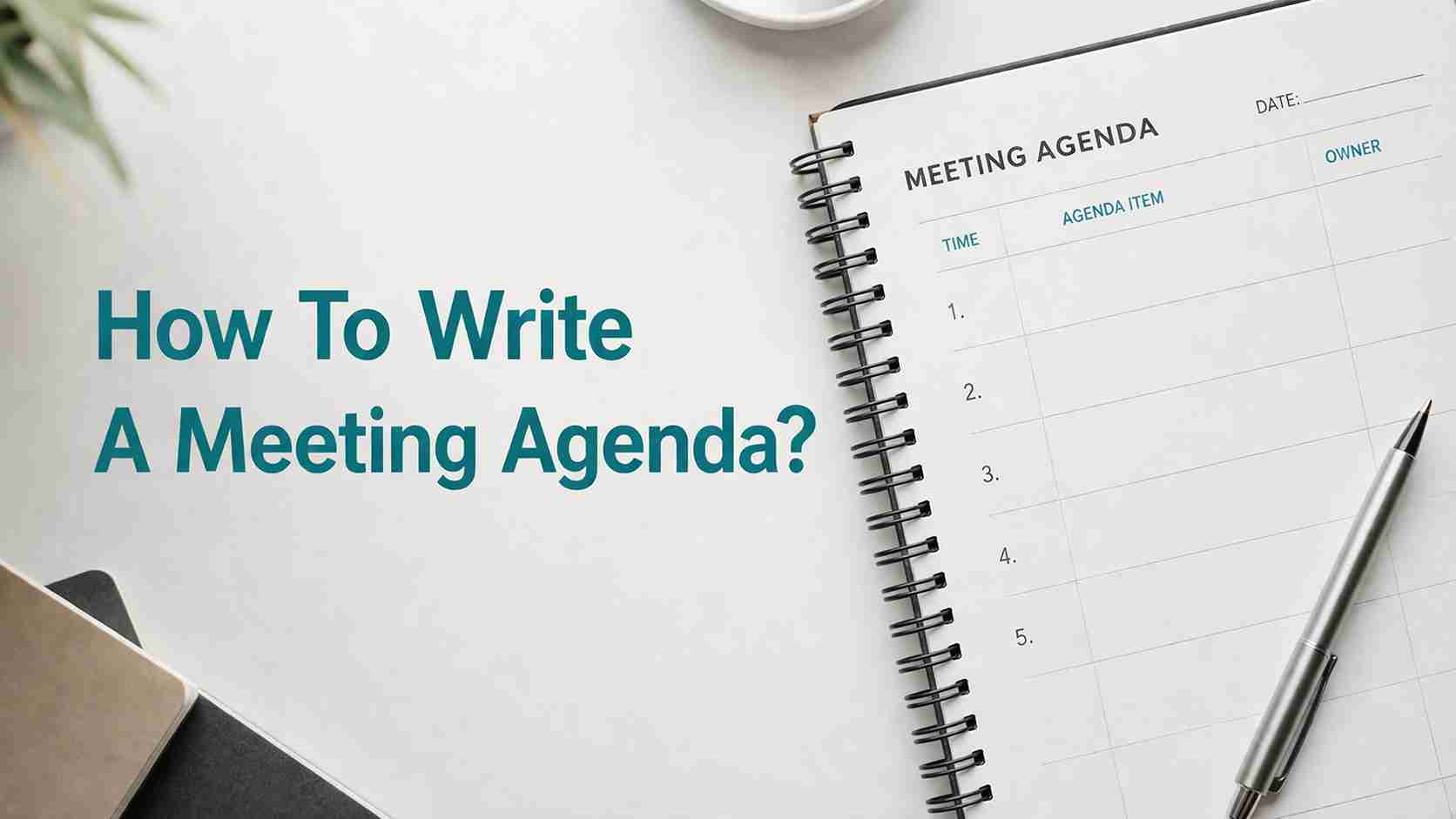
Have you ever sat through a meeting that went on and on with no clear direction? Or attended one where nobody knew what was being discussed? Well, the reason behind such meetings is the same – no proper meeting agenda in place.
A meeting agenda is a simple but powerful tool. It tells everyone what the meeting is about, what will be discussed, how long it will take and what decisions need to be made. When you write a good meeting agenda, meetings become shorter, clearer and more productive.
In this blog, we will walk you through everything you need to know about how to write a meeting agenda.
What Is A Meeting Agenda?
A meeting agenda is a simple written plan that outlines what will be discussed and how the meeting will run. It is commonly used in corporate meetings, workshops and professional events to organize discussions and keep everyone aligned. Shared in advance, it helps participants understand the purpose, prepare better and stay focused, ensuring nothing important is missed.
A lot of people confuse a meeting agenda with Minutes of Meeting (MoM) and use the two terms interchangeably. But they are actually two very different things. Simply put, the meeting agenda is what you plan to discuss before the meeting, and the MoM is the record of what actually happened and discussed in it.
How To Write A Meeting Agenda
Step 1: Define The Purpose Of The Meeting
Start by clearly identifying why the meeting is being held. A clear purpose keeps the discussion focused and outcome-driven.
- Define the main objective of the meeting
- Identify the expected outcome (decision, update, planning, etc.)
- Keep the purpose concise (1 – 2 sentences)
- Use it as the base for all agenda items
Step 2: List The Topics To Be Discussed
Once the purpose is clear, note down all topics that need to be covered. This ensures nothing important is missed.
- Brainstorm all relevant discussion points
- Do not filter ideas initially
- Remove topics not aligned with the objective
- Exclude items that can be handled outside the meeting
Step 3: Prioritize The Agenda Items
Organizing topics in the right order helps maintain flow and ensures important discussions happen first.
- Arrange topics based on importance
- Keep critical items at the beginning
- Group similar topics together
- Maintain a logical sequence
Step 4: Assign Time Slots To Each Topic
Time allocation helps keep the meeting structured and prevents unnecessary delays.
- Assign a fixed duration to each topic
- Keep time limits realistic
- Ensure total meeting time stays controlled
- Allow buffer time for discussion if needed
Step 5: Assign A Presenter Or Lead For Each Item
Assigning responsibility ensures accountability and better preparation from participants.
- Mention who will lead each topic
- Inform presenters in advance
- Ensure clarity on roles
- Avoid confusion during the meeting
Step 6: Add Supporting Documents Or Pre-Reading
Sharing materials in advance helps participants come prepared and improves discussion quality.
- Attach relevant documents or reports
- Share materials along with the agenda
- Highlight key information if required
- Reduce time spent explaining basics
Step 7: Share The Agenda In Advance
Sending the agenda early allows participants to prepare and contribute effectively.
- Share the agenda 24-48 hours before the meeting
- Use email or team tools for distribution
- Include all necessary details and attachments
- Set a deadline for adding new points
Elements Of A Meeting Agenda
Before you learn how to write a meeting agenda, you need to know what goes into one. Here are the essential components:
| Element | What It Includes |
| Meeting Title | Name or purpose of the meeting |
| Date and Time | When the meeting starts and ends |
| Attendees | List of people invited or required to attend |
| Agenda Items | Topics to be discussed with brief descriptions |
| Presenter Name | Who will lead each topic |
| Time Per Topic | Duration allotted for each agenda point |
| Goal of Each Topic | Is it for information, discussion or decision? |
| Attachments | Any documents or reports to be reviewed |
Types Of Meeting Agendas
Not all meetings follow the same structure. The agenda format should match the purpose of the meeting to keep discussions relevant and efficient.
- Informational meeting agenda: Focused on sharing updates, announcements, or key information
- Decision-making meeting agenda: Structured around specific decisions that need approval or closure
- Problem-solving meeting agenda: Designed for identifying issues, analyzing causes, and discussing solutions
- Status update meeting agenda: Short, recurring format for quick progress updates from team members
- One-on-one meeting agenda: Focused on performance discussions, feedback, goals and individual concerns
Why Is A Meeting Agenda Important?
Many people underestimate the value of a well-written agenda. Here is why it matters so much:
- Saves Time: When topics and time slots are fixed in advance, the meeting does not drift into unnecessary discussions. Everyone knows when to speak and when to move on.
- Keep Everyone Prepared: When participants receive the agenda before the meeting, they can prepare their points, bring the right data and contribute meaningfully. This leads to better decisions.
- Avoids Confusion: A clear agenda removes the guesswork. People know the goal of the meeting and what is expected from them.
- Makes Follow Up Easier: After the meeting, the agenda acts as a reference document. It also connects directly to the minutes of the meeting (MOM), which record what was discussed and what decisions were taken.
- Improves Participation: When people know the topics in advance, they feel more confident speaking up. The meeting becomes a two-way conversation rather than a one-sided update.
Common Mistakes To Avoid
Even experienced professionals overlook small details while creating agendas. Avoiding these mistakes keeps meetings focused and productive.
- Not Sharing The Agenda In Advance: Limits preparation time and reduces participation quality
- Listing Too Many Topics: Overloads the meeting and prevents meaningful discussion
- Not Defining The Goal Of Each Topic: Creates confusion around outcomes and delays decisions
- Skipping Time Slots: It leads to poor time management and extended meetings
- Not Following Up With Meeting Minutes: Not sharing and following up on meeting minutes leads to missed action items.
Tips To Write A Meeting Agenda
A well-structured agenda improves clarity, saves time, and keeps meetings outcome-focused.
- Use action-oriented language: Clearly define what needs to be done in each agenda item
- Keep it short and focused: Avoid lengthy descriptions and stick to key points
- Add buffer time: Reserve a few minutes for open discussion or unexpected topics
- Use a consistent template: Maintain a standard format for recurring meetings
- Review and improve: Evaluate what worked and refine the agenda for future meetings
Conclusion
A well written meeting agenda is one of the simplest ways to make meetings more productive, professional and respectful of everyone’s time. It does not require any special tools or formal training. Clear thinking, basic planning and the habit of preparing in advance are enough to make a difference. Even a simple agenda can improve how discussions flow and how decisions are made.
With regular practice, it becomes easier to structure meetings, manage time and keep conversations focused. Well run meetings are not accidental. They are the result of thoughtful planning and clear direction.
Related Reads:
FAQs
Q1. What should a meeting agenda include?
Meeting agenda should include the meeting title, date, time, location, list of attendees, agenda items with their goals, the name of the person presenting each item, time allocated for each topic and pre-reading material.
Q2. How far in advance should a meeting agenda be sent?
Ideally, the agenda should be sent at least 24 to 48 hours before the meeting.
Q3. How long should a meeting agenda be?
There is no fixed length, but as a rule of thumb, your agenda items should fit within the time frame of the meeting. Do not list 10 topics for a 30 minute meeting.
Q4. Can I write a meeting agenda for an informal team meeting?
Yes, even informal meetings benefit from a short agenda. And it does not need to be as detailed as a formal one.
Q5. What is the difference between a meeting agenda and a meeting invite?
A meeting invite is the calendar event that tells people when and where the meeting is. The agenda is a separate document (or part of the invite) that tells people what will be discussed.
Q6. How do I handle agenda items that run over time?
If a topic is taking longer than planned, the meeting organizer should acknowledge it and offer two options: continue the discussion and cut a less important agenda item or park the discussion.
Q7. Should every meeting have an agenda?
Yes, every meeting, regardless of size or formality, should have some form of agenda. Even a one-on-one check-in benefits from a short list of talking points.
Q8. Who is responsible for writing the meeting agenda?
Usually, the person who calls or organizes the meeting is responsible for writing the agenda.
Q9. What is the best format for a meeting agenda: paragraph or bullet points?
Bullet points or a numbered list format works best for meeting agendas. It is easier to scan, follow and refer back to during the meeting.
Q10. How is a meeting agenda related to minutes of the meeting?
The agenda is written before the meeting and sets the plan. The minutes of the meeting are written after the meeting and record what happened.






 Facebook
 Instagram
 Twitter




