


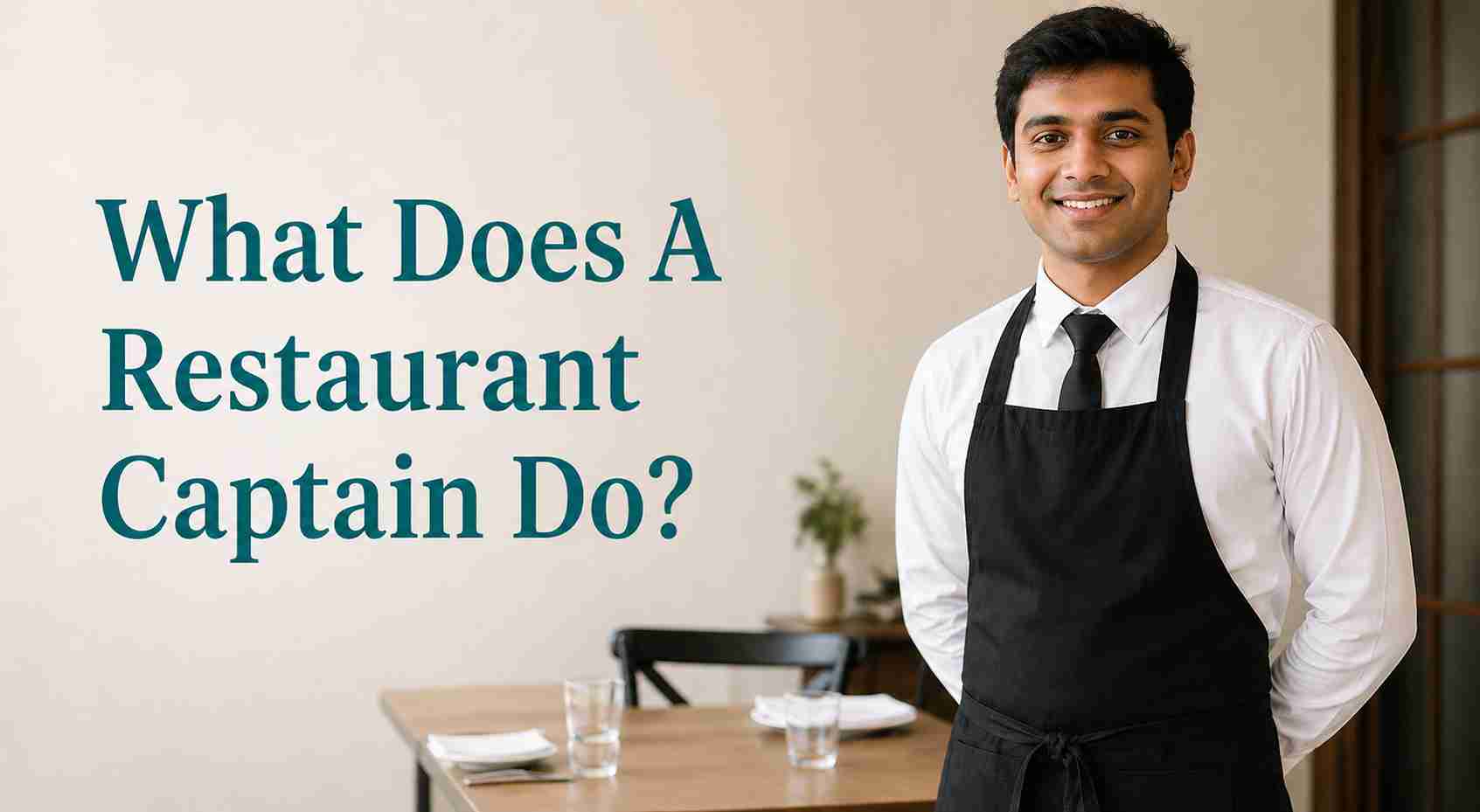
Have you ever walked into a nice restaurant and noticed someone who – with a big smile, greets you at the door, helps you pick the perfect dish and makes your entire dining experience feel effortless? That person is often the Restaurant Captain.
If you love people, food and a fast-paced environment this career might be made just for you. In this blog, we break down everything you need to know about becoming a restaurant captain in India.
What Is A Restaurant Captain?
A restaurant captain, also known as a head waiter or service captain, is the person who leads the front-of-house team in a restaurant. They are the key link between the guests and the kitchen. Unlike the restaurant manager who is responsible for overall operations and business performance, the Restaurant captain is the “team leader/supervisor” of the entire dining area.
They are not just serving food, they are managing the complete dining experience. This role exists in hotels, fine dining restaurants, banquet halls, resorts and even corporate cafeterias. The bigger and more premium the place, the more important and visible the captain’s role becomes.
What Does a Restaurant Captain Do?
A restaurant captain is responsible for a lot more than just taking orders. Here is exactly what they do:
1. Welcomes And Seats Guests: The captain is the first face a guest sees when they walk in. They greet guests warmly, check reservations and guide them to the right table.
2. Explains The Menu And Take Orders: They walk guests through the menu, suggest dishes based on preferences and dietary needs and pass the order accurately to the kitchen.
3. Supervises The Entire Dining Area: During service hours, the captain keeps a close eye on every table making sure food is served on time and every guest is well attended to.
4. Trains And Manages Junior Staff: The captain trains new waiters and stewards on table setup, order-taking and guest handling. They make sure the team follows the restaurant’s standards.
5. Manages Reservations And Seating Plans: They handle bookings, manage walk-in guests and plan the seating layout for the day, especially during peak hours and busy weekends.
6. Handles Guest Complaints And Requests: If a guest is unhappy about anything, the captain steps in immediately, listens calmly and finds a quick and professional solution.
7. Organizes Special Events And Private Parties: From birthday dinners to corporate lunches, the captain coordinates with the kitchen team and arranges everything to make the event run smoothly.
8. Checks Hygiene And Cleanliness Standards: Before and during service, the captain inspects tables, cutlery, glassware and linen to make sure everything meets hygiene and food safety norms.
9. Coordinates Between The Kitchen And Dining: The captain acts as the bridge between the chef and the guests – communicating special requests, allergies and customization so the right dish reaches the right table.
10. Collects Guest Feedback: At the end of the meal, the captain checks in with guests about their experience and shares any feedback with the manager and kitchen team for improvement.
Read: How To Become a Chef In India?
Education And Qualifications
- Diploma In Hotel Management: 1 to 3 years (entry-level professional course covering core hospitality skills)
- B.Sc. In Hospitality And Hotel Administration: 3 years (full-time degree with in-depth industry training and exposure)
- Certificate Course In Food And Beverage Service: 3 to 6 months (short-term course focused on basic restaurant service skills)
Important Note:
- Eligibility usually starts after Class 10 or 12
- Short-term courses help in quick job entry, degree courses support long-term growth
- Practical training and internships are part of most hospitality programs
- Entrance exams like NCHMCT JEE are required for top institutes
Skills A Restaurant Captain Must Have
Here are the skills that make a great restaurant captain –
- Communication Skills: You need to speak clearly and politely with guests, kitchen staff and your own team.
- Hospitality: The ability to make guests feel welcome, comfortable and valued is the most important skill in this job.
- Menu And Food Knowledge: A captain must know the menu thoroughly – ingredients, preparation style, allergens and pairings. Guests often ask questions and the captain should always have confident, accurate answers.
- Multitasking: On any given shift, a captain is handling reservations, supervising staff, attending to guests and coordinating with the kitchen – all at the same time.
- Problem-solving: What if the billing system crashes? What if two guests have a conflict? What if a dish is delayed? A captain must think fast and solve problems without creating panic or disrupting the guest experience.
- Memory: Remembering a regular guest’s preferred table or a returning customer’s food allergy, small personal gestures like these create loyal customers and build the restaurant’s reputation.
Career Scope And Salary Of A Restaurant Captain
The hospitality industry in India is growing fast and a restaurant captain role is just the beginning of a strong career journey.
Here is how growth usually looks step by step:
Restaurant Captain → Assistant Restaurant Manager → Restaurant Manager → Food and Beverage Manager → F&B Director → General Manager
Many hotel leaders today started from basic roles like waiter or captain. In this field, skills, attitude and experience matter as much as degrees.
There are also other paths you can explore. With experience, moving into event management becomes easier since guest handling and coordination skills are already strong.
Average Salary:
A restaurant captain in India typically earns around Rs. 18,000 to Rs. 30,000 per month, depending on the restaurant, city and experience level.
Note: In five-star hotels, luxury resorts and premium fine dining restaurants, salaries can go even higher.
Conclusion
A career as a restaurant captain is a fantastic choice if you are a people person who thrives in a busy, social environment. It is one of those rare careers where your personality and attitude matter as much as your technical skills. Just the right mindset and a genuine willingness to learn and grow.
The hospitality industry in India is booming and there is a real and growing need for trained, professional and enthusiastic restaurant captains across cities big and small.
If you are looking for a job in this sector, click Here.
FAQs
Q1. What is the difference between a restaurant captain and a waiter?
A waiter mainly takes orders and serves food, while a restaurant captain supervises the entire dining area, leads the team and ensures guests have a smooth experience.
Q2. Can I become a restaurant captain after Class 12?
Yes, many restaurants hire after Class 12 and provide on-the-job training, but having a diploma in hotel management can help you start stronger and grow faster.
Q3. Is English necessary to become a restaurant captain?
Basic English is useful, especially in premium restaurants, but many places operate in regional languages and communication skills can always be improved over time.
Q4. Is this job only for men?
Not at all, women are actively working as restaurant captains across hotels, cafes and restaurant chains in India.
Q5. What are the working hours of a restaurant captain?
This is a shift-based role, usually 8 to 10 hours and working on weekends or holidays is common since those are peak business hours.
Q6. Does a restaurant captain receive tips?
Yes, most restaurants distribute service charges or tips among staff and captains usually receive a higher share due to their responsibility level.
Q7. What is the difference between a restaurant captain and a manager?
A restaurant captain handles the dining floor, leads the service team and ensures guests have a smooth experience, while a manager oversees the entire restaurant, including operations, staff management, revenue and overall business performance.
Q8. How do I start this career as a fresher?
Starting as a waiter or steward is the most common path, where learning on the job and observing seniors helps in moving up to a captain role.
Q9. Is the restaurant captain role physically demanding?
Yes, it is an active role that involves standing, walking and managing the floor throughout the shift, so basic stamina is important.
Q10. What is the difference between a restaurant captain and a receptionist?
A restaurant captain focuses on dining service and guest experience at the table, while a receptionist handles front desk operations and guest check-ins at a hotel.




 Facebook
 Instagram
 Twitter




