


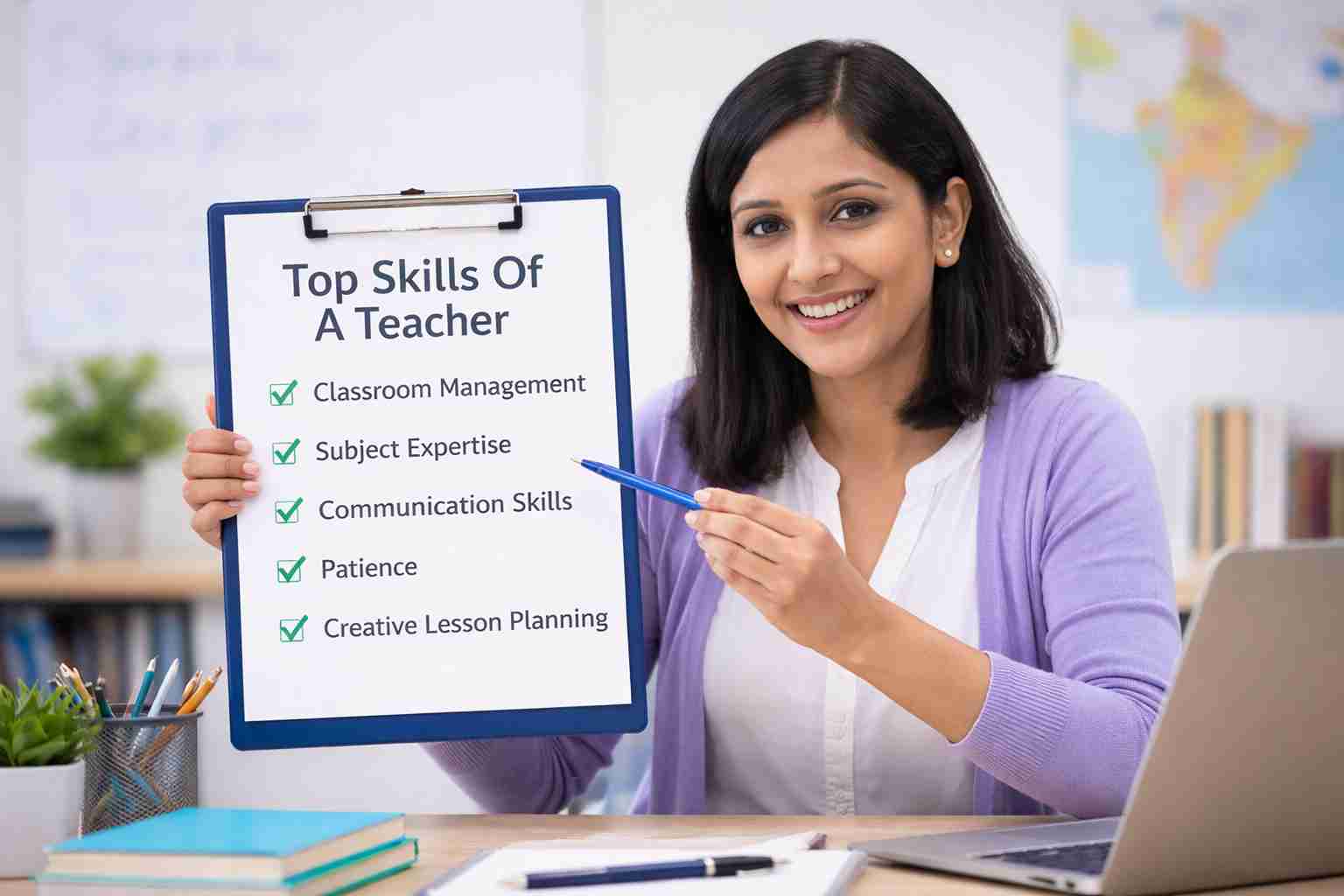
A teaching resume should never feel like a formality. It is not just a document listing qualifications, it reflects personality, teaching philosophy, classroom strength and the kind of educator someone truly is. When schools shortlist candidates, they do not just look at degrees. They scan for the skills of a teacher that indicate classroom confidence, student impact and long-term contribution. That is why writing the right skills in a resume is not about filling space. It is about showing value.
This blog explores the top skills of a teacher to write in a resume, how to present them naturally and how to make them stand out without sounding generic.
Why Skills Matter More Than Qualifications
Many candidates assume that B.Ed, M.Ed or subject specialization is enough. While qualifications are important, recruiters often focus more on application than theory. Two teachers may hold the same degree, but the one who demonstrates: Classroom control, Student engagement strategies, Adaptability and Measurable results will almost always have an edge. Schools want teachers who can handle real classroom dynamics, not just syllabus completion.
What Recruiters Look For In A Teaching Resume


When a principal or HR manager reads a resume, they silently look for answers to questions like:
- Can this teacher manage a classroom confidently?
- Will students respond positively to their style?
- Can they adapt to digital learning tools?
- Do they show initiative beyond textbook teaching?
Your resume must answer these questions through skills and examples, not empty claims.
Top Teaching Skills Employers Value Most
Let us explore the most important teaching skills in a way that feels real and usable.
1. Classroom Management: The Backbone Of Teaching
No matter how brilliant a lesson plan is, it fails without classroom discipline. Classroom management is not about strictness. It is about structure, consistency and mutual respect. Recruiters appreciate teachers who can maintain order while encouraging participation.
For example – Instead of writing:“Good classroom management skills” Write something like: “Established structured classroom routines that improved student focus and minimized disruptions.”
This shows control, leadership and impact, all in one sentence.
2. Communication Skills That Go Beyond Speaking
Teaching is constant communication. It includes explaining concepts, listening to doubts, interacting with parents, and coordinating with colleagues. Strong communication means:
- Breaking complex topics into simple explanations
- Encouraging questions without hesitation
- Giving constructive feedback
- Maintaining professional parent interactions
In a resume, communication should never be mentioned alone. It should appear inside achievements. For example: “Conducted interactive sessions that improved student participation and conceptual clarity.”
3. Subject Expertise With Application
Every teacher must demonstrate strong command over their subject. But listing “Subject Knowledge” as a skill is too vague. Instead, show how that knowledge helped students.
Strong subject expertise means more than knowing the content. It means being able to break it down for different learning levels, connect it to real world examples and design assessments that accurately test understanding. Teachers who demonstrate this in their resume stand out because they show awareness of both their subject and their students.
For example: “Taught Biology to senior secondary students with consistent improvement in board exam results.”
Or for a fresher: “Completed student teaching in Chemistry with hands-on lab demonstrations and concept mapping strategies for Grade 10 students.” This reflects expertise and outcome.
4. Lesson Planning And Curriculum Alignment
Lesson planning is not just preparing notes. It is about aligning teaching with curriculum goals and student learning levels. Schools prefer teachers who:
- Design structured lesson plans
- Integrate activities into lessons
- Adjust pacing based on student understanding
- Follow curriculum standards properly
In resumes, lesson planning becomes stronger when connected with strategy or innovation.
Example: “Designed activity-based lesson plans aligned with curriculum objectives to enhance student engagement.” Now it feels thoughtful, not robotic.
5. Adaptability In Modern Classrooms
Education has changed significantly in recent years. Hybrid learning, digital tools, and diverse classrooms require flexibility.
Adaptability shows that a teacher can handle:
- Online teaching platforms
- Mixed learning environments
- Sudden schedule changes
- Diverse learning speeds
Instead of simply writing “Flexible and adaptable,” demonstrate it. For example: “Transitioned seamlessly from traditional classroom teaching to digital platforms while maintaining academic continuity.” This signals readiness for modern education systems.
6. Technology Integration Skills
Today, digital literacy is no longer optional for teachers. Educational institutions expect familiarity with:
- Learning Management Systems
- Online assessment tools
- Interactive presentations
- Smart classroom technologies
Technology skills show a growth mindset and willingness to evolve. Even a simple addition like: “Integrated digital tools to create interactive and engaging classroom sessions” can significantly strengthen a teaching resume.
7. Emotional Intelligence And Student Understanding
Teaching is deeply human. Students perform better when they feel understood and supported. Empathy, patience and emotional awareness matter more than many realize. These qualities help teachers:
- Manage different learning speeds
- Support struggling students
- Build trust inside the classroom
- Maintain positive learning environments
In resumes, emotional intelligence works best when shown through support initiatives. For example: “Provided individualized guidance to students requiring additional academic support.” This feels authentic and grounded.
8. Assessment And Feedback Skills
Assessments are not just about grading papers. They are about identifying learning gaps.
Strong teachers know how to:
- Design meaningful tests
- Analyze student performance trends
- Provide constructive feedback
- Modify instruction based on results
Resume line example: “Developed structured evaluation methods to track academic progress and improve performance outcomes.” Now the skill appears analytical and result-oriented.
9. Collaboration And Team Participation
Collaboration in teaching goes beyond staff meetings. Teachers regularly coordinate with subject departments, school leadership, activity coordinators and parents. Schools value teachers who contribute to shared goals, support colleagues and participate in curriculum planning.
For example:
- Fresher: “Collaborated with faculty members to organize interdisciplinary academic projects.”
- Experienced: “Led cross-departmental collaboration to develop a project-based learning unit across Science, Math and English, improving student engagement across all three subjects.”
How To Write Teaching Skills In A Resume
Avoid creating a long skill list without context. Instead:
- Keep a dedicated skill section (8-10 strong keywords).
- Support each skill within your experience section.
- Use action verbs instead of adjectives.
- Add measurable outcomes wherever possible.
This keeps the resume impactful without sounding repetitive.
Teaching Resume Skills For Freshers
Freshers often worry about not having real experience, but they forget that their training counts more at this stage. Teaching practicals, demo classes, micro-teaching sessions and school internships from their B.Ed or M.Ed program are all valid and must appear on their resume.
Here is how to write them:
- Reference Practice Teaching: “Completed 60-hour teaching at a CBSE school and conducted lessons in English for Grades 6 to 8.”
- Highlight Academic Strengths: “Scored distinction in Pedagogy and Curriculum Design during B.Ed training.”
- Show Initiative: “Volunteered to conduct reading sessions for under-performing students during teacher training.”
- Include Co-curricular Work: “Organized a Science Fair as part of student teacher responsibilities, where I coordinated with 12 project groups.”
Always remember that concrete examples from training demonstrate readiness far better than a vague skills list ever will.
Teaching Resume Skills For Experienced Educators
Experienced educators should highlight growth, leadership and impact rather than simply listing years of service.
For example: Instead of writing “10 years teaching experience” write something more layered like: “Over 10 years of teaching experience with consistent improvement in student academic performance and curriculum leadership involvement.”
Experienced teachers can highlight:
- Curriculum Design Roles: “Led curriculum revision for the Mathematics department, aligning content with updated board standards.”
- Mentorship: “Mentored three newly appointed teachers during their orientation period and supported them in lesson planning and classroom management.”
- Leadership: “Served as Head of Department for four years, overseeing academic planning, staff coordination and parent communication.”
Remember depth creates credibility. The more specific the achievement, the stronger the resume.
Common Mistakes Teachers Make In Resumes
- Writing generic skills without examples
- Copying skill lists from the internet
- Ignoring digital teaching ability
- Overloading resume with too many buzzwords
- Not tailoring skills to the job description
Clarity always wins over decoration.
Conclusion
A teaching resume is not about sounding impressive. It is about being clear. Show what you have done, how you did it and what changed because of you. Whether you are a fresher or have years of experience, that clarity is what gets you shortlisted. Skills without context are just words. Give them a story and your resume will do the rest.
Related Read:
FAQs
1. What are the most important skills of a teacher to write in a resume?
The most important skills include classroom management, communication, subject expertise, lesson planning, student engagement, adaptability and technology integration. Schools look for a balance of instructional ability and interpersonal strength.
2. Should soft skills be included in a teacher’s resume?
Yes, absolutely. Teaching is a people-focused profession. Skills like empathy, patience, leadership and teamwork are highly valued because they directly impact classroom atmosphere and student performance.
3. How many skills should be mentioned in a teaching resume?
Ideally, 8-12 relevant skills are enough. Instead of listing too many, focus on skills that match the job description and support them with examples in the experience section.
4. Can fresher teachers write teaching skills without experience?
Yes. Freshers can include internship experience, demo classes, volunteer teaching, academic presentations and training workshops to demonstrate their teaching skills effectively.
5. How do I make my teaching skills stand out in a resume?
Avoid generic phrases like “good communication skills.” Instead, use action-oriented statements such as “Conducted interactive classroom sessions that improved student participation.” Specific examples make skills more impactful.
6. Are technology skills important for teaching jobs today?
Yes. Most schools expect teachers to be comfortable with digital tools like Learning Management Systems, smart boards, online assessments and virtual classrooms. Technology integration increases hiring chances.
7. Should I customize teaching skills for each job application?
Definitely. Every school may prioritize different strengths. Aligning your skills with the job description improves relevance and increases the chances of shortlisting.
8. What skills do private schools usually look for in teachers?
Private schools often look for strong communication skills, student engagement techniques, technology usage, leadership qualities and the ability to contribute beyond classroom teaching.
9. How can experienced teachers present their skills?
Experienced teachers should highlight measurable achievements such as improved exam results, curriculum leadership roles, mentoring responsibilities or successful school initiatives.
10. Should I list skills separately or include them in work experience?
Both approaches work best together. A separate skills section helps with keyword visibility, while integrating skills within work experience adds depth and credibility.






 Facebook
 Instagram
 Twitter




