


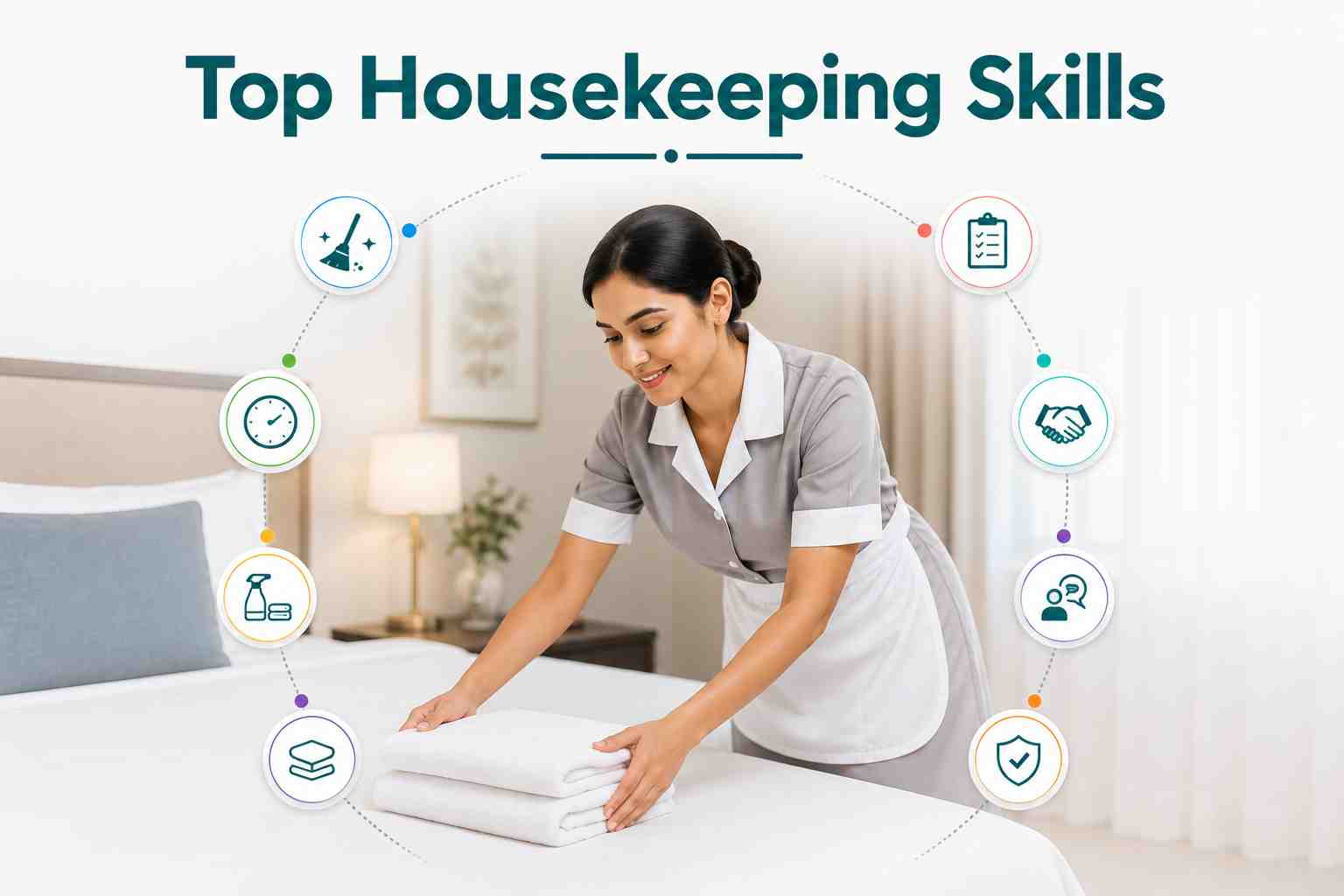
When people hear the word “housekeeping,” they often think the job is only about cleaning rooms and mopping floors. But that’s only one part of the role.
Housekeeping professionals are responsible for creating clean, organised and comfortable spaces in places such as hotels, hospitals, offices, schools, and residential societies. And, to handle these responsibilities effectively, they need more than just cleaning knowledge. Skills such as time management, communication, attention to detail, teamwork, and problem-solving are equally important.
Whether you are a fresher looking for a housekeeping job or an experienced professional updating your resume, knowing these skills can help you improve your chances of getting hired.
In this blog, we will discuss the top 10 housekeeping skills, why employers value them and how they can help you perform better in your role.
What Are Housekeeping Skills?
Housekeeping skills are the abilities that help housekeeping professionals perform their duties effectively and maintain cleanliness, hygiene, and organisation in a workplace.
These skills include both technical competencies, such as cleaning and sanitization, and workplace skills, such as communication, teamwork, and time management. Together, they help housekeeping staff complete their tasks efficiently while ensuring high standards of cleanliness and customer satisfaction.
The stronger your housekeeping skills, the easier it becomes to meet employer expectations and perform your responsibilities successfully.
Top 10 Housekeeping Skills
1. Attention To Detail
Attention to detail is one of the most important skills for a housekeeper. A clean room may appear spotless at first glance, but small issues such as dust on furniture, stains on bed-sheets, or overflowing bins can negatively affect customer experience.
Housekeeping professionals must carefully inspect their work and ensure that every area meets cleanliness standards. This skill helps maintain quality and reduces the chances of complaints from guests, customers, or supervisors.
2. Time Management
Housekeepers often have multiple responsibilities to complete during a shift. In hotels, for example, several rooms may need to be cleaned and prepared before new guests arrive.
Good time management helps housekeeping staff prioritise tasks, meet deadlines and maintain productivity without compromising quality. Employees who can manage their time effectively are often able to handle larger workloads and perform more efficiently.
3. Cleaning And Sanitization Skills
A housekeeper must understand proper cleaning techniques and sanitization procedures. This includes knowing how to use cleaning products safely, operate equipment correctly, and follow hygiene standards.
Different environments may require different cleaning methods. For example, hospitals have stricter sanitization requirements than offices or residential buildings. Strong cleaning and sanitization skills help ensure a safe and hygienic environment for everyone.
4. Physical Stamina
Housekeeping can be physically demanding. Employees spend much of their day standing, walking, bending, lifting supplies, and moving equipment.
Physical stamina allows housekeepers to perform these tasks efficiently throughout their shift without affecting the quality of their work. Maintaining good health and fitness can help professionals handle the physical demands of the job more comfortably.
5. Communication Skills
Although housekeeping is often considered an operational role, communication remains an essential skill. Housekeepers regularly interact with supervisors, colleagues, guests, patients, residents, or customers.
They may need to report maintenance issues, understand instructions, or respond to requests. Effective communication helps prevent misunderstandings and ensures that work is completed accurately and efficiently.
6. Organizational Skills
Housekeeping involves more than cleaning. Employees are often responsible for managing supplies, organising equipment and maintaining inventory levels.
Strong organisational skills help housekeepers keep track of their responsibilities and ensure that cleaning materials are always available when needed. Being organised also improves efficiency and helps reduce mistakes.
7. Teamwork
Housekeeping departments rarely work alone. In hotels, housekeeping staff coordinate with reception teams and maintenance departments. In hospitals, they may work alongside healthcare staff. In offices, they often collaborate with facility management teams.
Being able to work well with others helps ensure smooth operations and allows teams to complete tasks more effectively.
8. Reliability And Responsibility
Employers value housekeeping staff who can be trusted to perform their duties consistently. Reliability means arriving on time, completing assigned tasks, following workplace policies and maintaining professional standards.
Responsible employees contribute to a positive work environment and are often considered for additional responsibilities and career advancement opportunities.
Unexpected challenges can arise in any housekeeping role. A cleaning machine may stop working, supplies may run low, or a guest may raise a concern that requires immediate attention.
Problem-solving skills help housekeepers identify practical solutions quickly and minimize disruptions. Employees who can handle issues independently are often highly valued by employers.
10. Customer Service Skills
In many workplaces, especially hotels and residential properties, housekeeping staff interact directly with customers and guests.
Being polite, respectful and helpful can significantly improve the overall customer experience. Strong customer service skills help build a positive impression of the organisation and contribute to customer satisfaction.
Why Are Housekeeping Skills Important?
Housekeeping skills are important because they help professionals:
- Maintain cleanliness and hygiene standards
- Create a safe environment for customers and employees
- Improve customer satisfaction through quality service
- Complete tasks efficiently and reduce errors
- Enhance employability and career growth opportunities
Strong housekeeping skills benefit both employees and employers by ensuring smooth daily operations and high service standards.
Housekeeping Skills To Include On Your Resume
When applying for a housekeeping job, highlighting relevant skills on your resume can help employers quickly understand your strengths. Some commonly listed housekeeping skills include:
- Attention to detail
- Cleaning and sanitization
- Time management
- Communication skills
- Teamwork
- Organizational skills
- Customer service
- Inventory management
- Problem-solving
- Physical stamina
Make sure the skills you mention reflect your actual experience and abilities.
🔗Read:How To Create A Resume?
How To Improve Your Housekeeping Skills
Improving housekeeping skills requires continuous learning and practice. One of the best ways to develop these skills is through hands-on experience in housekeeping roles.
You can also improve by learning proper cleaning techniques, understanding workplace safety procedures, improving communication skills and seeking feedback from supervisors. Training programmes and workplace workshops can further enhance your knowledge and help you stay updated with industry standards.
The more experience and training you gain, the stronger your skill set becomes.
Conclusion
Housekeeping is much more than keeping spaces clean. It requires a combination of technical knowledge, physical ability, and workplace skills that help professionals perform their responsibilities efficiently.
From attention to detail and time management to communication and customer service, each skill plays an important role in delivering high-quality work. Developing these housekeeping skills can help you perform better in your current role, strengthen your resume, and improve your chances of securing future job opportunities.
FAQs
1. What are housekeeping skills?
Housekeeping skills are the abilities that help professionals maintain cleanliness, hygiene, organisation, and safety in workplaces such as hotels, hospitals, offices and residential properties.
2. What is the most important housekeeping skill?
Attention to detail is often considered one of the most important housekeeping skills because it helps employees identify and address cleanliness issues that others may overlook.
3. Why are housekeeping skills important?
Housekeeping skills help maintain high cleanliness standards, improve customer satisfaction, support workplace safety and ensure that daily operations run smoothly.
4. Do housekeeping jobs require communication skills?
Yes. Housekeeping staff often communicate with supervisors, colleagues, guests and customers. Good communication helps ensure tasks are completed correctly and efficiently.
5. What skills should I include on my housekeeping resume?
Common housekeeping resume skills include cleaning and sanitization, time management, attention to detail, teamwork, communication, customer service and organisational skills.
6. Can I get a housekeeping job without experience?
Yes. Many entry-level housekeeping jobs do not require prior experience. However, demonstrating relevant skills and a willingness to learn can improve your chances of getting hired.
7. How can I improve my housekeeping skills?
You can improve your housekeeping skills through practice, training, workplace experience and by learning proper cleaning, safety, and organisational techniques.
8. What industries hire housekeeping professionals?
Housekeeping professionals are commonly hired by hotels, hospitals, offices, schools, shopping malls, residential societies and commercial establishments.
9. Is physical fitness important for housekeeping jobs?
Yes. Housekeeping often involves standing, walking, lifting, bending and performing repetitive tasks, making physical stamina an important skill for the role.
10. Can housekeeping professionals advance in their careers?
Yes. With experience and strong performance, housekeeping staff can progress to supervisory, team leader and housekeeping manager positions.




 Facebook
 Instagram
 Twitter




