


When you scroll through job postings on online platforms, you will notice that roles are often labelled as “entry level”, “mid level”, or “senior level.” But what do these labels actually mean? And how do they shape what a job really involves?
Well, this is where the concept of level of work comes in. Understanding it can help you find roles that match where you are in your career, plan your next move and make smarter decisions about the opportunities you want to pursue.
This guide will explain it all very simply, with real examples from the Indian workplace.
What Is Level Of Work?
The level of work refers to the position or seniority of a role within an organization’s hierarchy. In simple terms, it answers the question: “Where does this role sit in the company structure?”
It reflects the years of experience required, the complexity of tasks involved, the degree of decision making authority the role carries, and the overall responsibility associated with it.
When you look at a job posting, the level of work is not always spelled out directly but it is always there if you know where to look.
For example, the job title gives you the first signal of where the role sits in the hierarchy and the experience required section confirms it. Together, they give you a clear picture of the seniority and responsibility the role carries.
Why Does Level Of Work Matter?
Understanding the level of work is just as important as understanding the nature of work. Here is why it matters for both job seekers and organisations.
For job seekers, knowing the level of work helps you apply for roles that genuinely match your experience and skills. Applying for a level too senior can set you up for unnecessary pressure. Applying for a level too junior when you are experienced can lead to disengagement and frustration.
For HR professionals and hiring managers, clearly defining the level of work in a job posting helps attract candidates with the right experience, set accurate salary expectations, and build a well-structured team. A mismatch in level expectations is one of the most common reasons a new hire does not work out.
For career planning, understanding the level of work in your current role and what the next level looks like helps you plan your progression with clarity. It helps you identify the skills, experience and behaviours you need to demonstrate in order to move up.
Levels Of Work In Indian Organisations
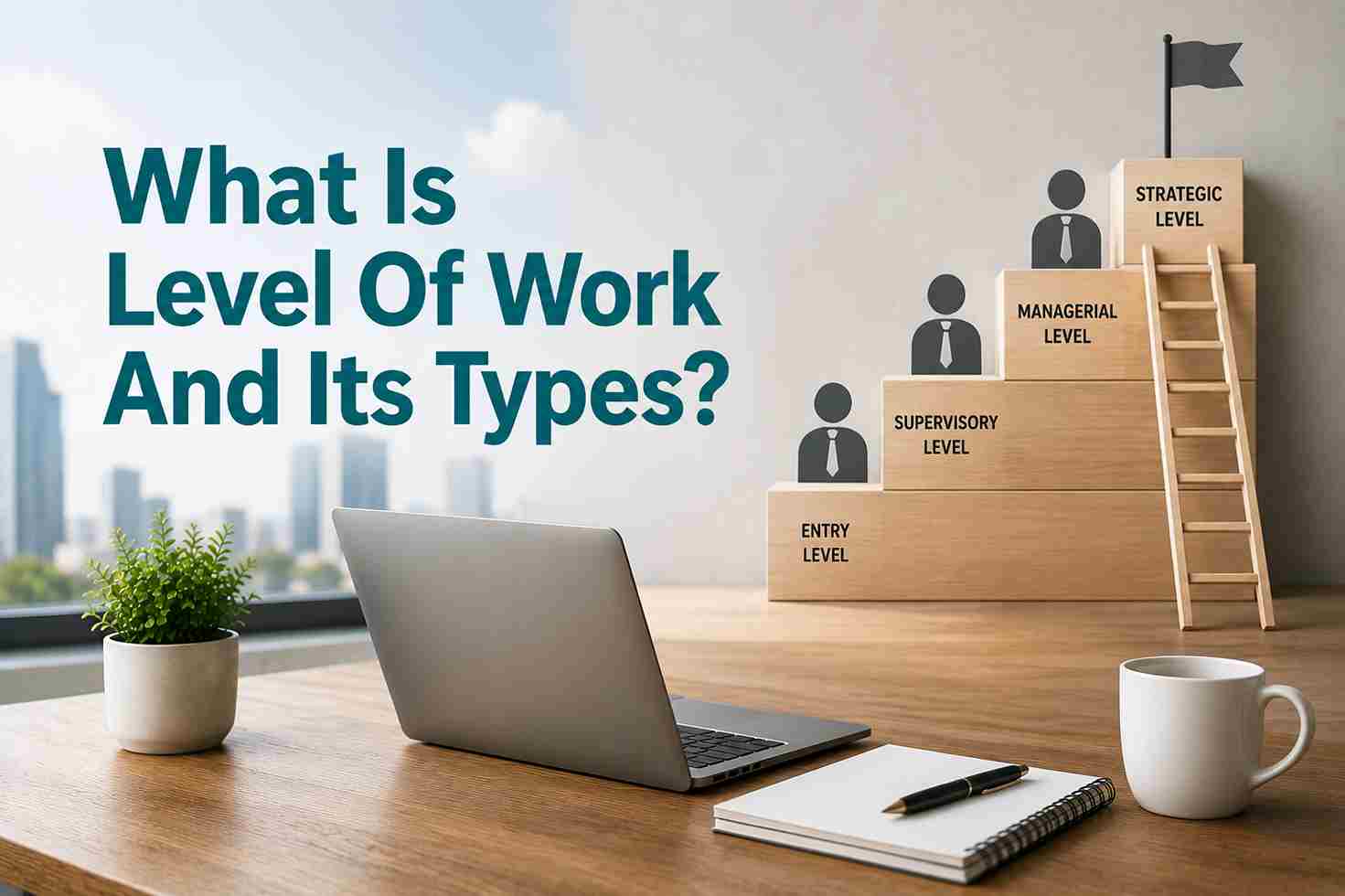
While every organisation structures its hierarchy differently, most Indian companies follow a similar leveling framework. The most common levels you will encounter are as follows:
1. Entry Level
Entry level roles are designed for freshers or candidates with up to two years of experience. The primary focus at this level is on learning, execution, and building foundational skills in your chosen domain.
Decision making authority is minimal and tasks are closely supervised by a senior team member or manager. The expectation is that you follow established processes, ask questions and develop the capabilities needed to grow.
Common titles at this level include Executive, Associate, Analyst, Coordinator, and Trainee.
Example: A fresh MBA graduate joining an HR team as an HR Executive, handling tasks like scheduling interviews, maintaining employee records and coordinating on-boarding activities.
2. Mid Level
Mid level roles typically require three to seven years of experience and involve a higher degree of independent work, ownership, and accountability. Professionals at this level are expected to manage their work with minimal supervision and often coordinate with or guide junior team members.
At this level, you are no longer just executing. You are starting to take ownership of outcomes, contribute to decisions, and demonstrate leadership within your area of work.
Common titles include Manager, Senior Executive, Team Lead, Assistant Manager, and Specialist.
Example: A Senior HR Executive/ HR Manager handling end to end recruitment for a business unit, managing a team of two executives, and reporting to the HR Head.
3. Senior Level
Senior level roles involve strategic thinking, cross functional collaboration, and significant decision making authority. Professionals at this level are responsible for larger teams, departments, or business functions and are expected to drive outcomes that impact the organisation as a whole.
At this level, the expectation shifts from doing to leading. You are shaping the direction of your function, influencing business decisions, and developing the people below you.
Common titles include Senior Manager, Associate Director, Deputy General Manager, and General Manager.
Example: A Senior HR Manager or HR Director responsible for the entire people function of an organisation, including talent acquisition, learning and development, employee engagement, and HR compliance.
4. Leadership Level
Leadership level roles are the most senior positions in an organisation. They involve setting the vision, driving business strategy, and leading the organisation or a significant part of it. Professionals at this level are accountable to the board, investors, or the organization’s founders.
The work at this level is almost entirely strategic and relational. It involves making decisions with long term consequences, managing senior stakeholders, and ensuring the organisation is moving in the right direction.
Common titles include Vice President, Chief Human Resources Officer, Managing Director and Chief Executive Officer.
Example: A CHRO at a large Indian conglomerate responsible for defining the people strategy across multiple business units, reporting directly to the CEO and Board.
How Level Of Work Is Determined
The level of work in a role is not decided randomly. Most organisations follow a structured process to classify roles consistently. Given below are the factors that are usually considered into determining the level of work for any role:
1. Years Of Experience Required. This is the most visible indicator. Most job postings specify a minimum and maximum experience range that signals the expected level.
2. Complexity Of Tasks. The more complex, ambiguous, and high stakes the tasks involved, the higher the level of work. Entry level roles involve clearly defined tasks. Leadership level roles involve navigating uncertainty and making decisions without a clear playbook.
3. Decision Making Authority. The higher the level, the greater the authority to make decisions independently and the wider the impact of those decisions on the organisation.
4. Team Management Responsibility. Roles that involve managing people are typically classified at a higher level than individual contributor roles at the same experience range.
5. Compensation Range. Salary bands are closely tied to levels of work. Most Indian organisations have defined pay ranges for each level, which helps maintain consistency and fairness across the organisation.
Level Of Work Vs Job Title
One of the most common sources of confusion for job seekers in India is the inconsistency in job titles across organisations. The same title can mean very different things at different companies.
A “Manager” at a large multinational company might manage a team of fifteen people and a significant budget. However, at a ten-person startup, the same title might mean you are the only person handling a function with no direct reports.
This is why it is important to look beyond the job title and understand the actual level of work involved. Always check the experience required, the reporting structure, the team size and the scope of responsibilities before drawing conclusions about a role’s level.
The title tells you what the company calls the role. The level of work tells you what it actually involves.
Level Of Work And Salary In India
In most organisations, your salary depends on the level of work you are at. Here is a rough salary range across levels to give you a general idea. Keep in mind these numbers vary based on the industry, company size and city.
Entry Level: Freshers and candidates with up to two years of experience typically earn between 3 LPA and 6 LPA in most industries. Technology and finance roles may command higher starting salaries.
Mid Level: Professionals with three to seven years of experience typically earn between 8 LPA and 20 LPA depending on the domain, company, and city.
Senior Level: Senior professionals with eight or more years of experience typically earn between 20 LPA and 50 LPA. Leadership roles in large organisations or high growth startups can command significantly higher packages.
Leadership Level: C-suite and VP level roles in India typically start at 40 LPA and can go well beyond 1 crore per annum in large enterprises and MNCs.
These salary ranges are rough and not fixed. The actual salary always depends on the specific role, organisation, industry and the candidate’s individual profile.
Read: How To Answer – What Is Your Salary Expectation?
Conclusion
The level of work is one of the most important things to understand when evaluating any job opportunity. It tells you where a role sits in the organisation, what experience and skills are expected, how much authority and responsibility the role carries, and what the compensation expectations are.
Whether you are a fresher mapping out your first job, a mid-career professional planning your next move, or an HR manager building a team, understanding the level of work helps you make smarter, more informed decisions.
So hey, the next time you look at a job posting, do not just read the title, read the level too.
FAQs
1. What does level of work mean in a job posting?
Level of work refers to the seniority and position of the role within the organisation. It reflects the experience required, the complexity of tasks, and the degree of decision making authority involved.
2. How do I identify the level of work in a job posting?
Look at the job title and the experience required section. These two together give you the clearest picture of where the role sits in the organisational hierarchy.
3. Can two people have the same job title but different levels of work?
Yes. Job titles are not standardized across organisations. Always read the full job description and experience requirements to understand the actual level of work involved.
4. What is the difference between level of work and nature of work?
The nature of work describes what a person does in a role on a day to day basis. The level of work describes where the role sits in the organisational hierarchy in terms of seniority, experience, and responsibility.
5. How does level of work affect salary in India?
Salary in India is directly tied to the level of work. Higher levels command higher compensation because they involve greater responsibility, complexity and decision making authority.
6. What is job leveling?
Job leveling is the process organisations use to classify roles consistently across the company based on factors like experience required, complexity of tasks, decision making authority, and team management responsibility.
7. Is a Team Lead considered mid level or senior level?
In most Indian organisations, a Team Lead is considered mid level. They manage a small team and report to a Manager or Senior Manager but are not yet at the senior leadership level.
8. Can someone at an entry level role do senior level work?
Occasionally, yes. In smaller organisations or startups, people at junior levels sometimes take on responsibilities beyond their level. However, this should ideally be recognised through a formal promotion or role upgrade.
9. How do I move from one level of work to the next?
Moving up typically requires a combination of years of experience, demonstrated performance, expanded skill sets, and the ability to take on greater responsibility. Many organisations also have formal promotion cycles and performance review processes that govern level transitions.
10. Does the level of work change within the same role over time?
Yes. As an employee grows and takes on more responsibilities, their level of work can increase even if their title remains the same. Formal recognition of this growth usually comes in the form of a promotion or a revised job level.






 Facebook
 Instagram
 Twitter




