


Whether you are a job seeker looking to explore hidden opportunities or a professional reaching out to request any information, a letter of inquiry is one of the most under-rated tools in your career kit. However, when done right, it opens doors that a standard application never will. Done poorly, it ends up in the bin.
This blog covers everything you need to know about writing a letter of inquiry, from what it actually is to how to structure it, format it and send it with confidence.
What Is A Letter Of Inquiry
A letter of inquiry is a formal letter written to request information, explore a potential opportunity or gather details needed to make a decision. It is different from a job application because you are not responding to an advertised role. You are proactively reaching out.
In a professional setting, this letter could be sent to:
- A vendor asking about pricing
- A company asking if they are hiring
- A partner organisation asking about a potential collaboration
In the context of job searching, it is often sent to companies you admire, even when no vacancy is publicly listed.
To sum up, the purpose of a letter of inquiry is to open a conversation, where you are not directly making a demand but making a polite, professional and purposeful request.
How To Write A Letter Of Inquiry: Step By Step
Step 1: Write A Strong Opening
Your first paragraph should immediately tell the reader who you are and why you are writing. Do not bury the point, be direct.
Start with your name, your role or background and the purpose of the letter. If someone referred you, mention their name here as it builds instant credibility.
A strong opening respects the reader’s time and makes them want to keep reading.
Step 2: Introduce Your Organization
After the opening, give a short and relevant background. Stick to what matters for this specific inquiry. If you are writing as an individual, mention your key skills, years of experience and what makes you a strong fit for the organisation. If you are writing on behalf of a company, describe what the company does, how large it is and why you are reaching out to this particular recipient.
Keep this section to two to three sentences. The goal is to establish who you are, not to be overwhelmed with information.
Step 3: State Your Need Clearly
This is the heart of the letter. Be specific about what you are asking for.
Vague letters get vague responses or no response at all. If you are inquiring about a job, mention the type of role and the department. If you are a business seeking services, describe the scope of your requirement. If you need information, ask a specific question.
Avoid using filler phrases like “I am writing to express my interest in possibly exploring potential opportunities.” Just say what you want.
Step 4: Explain Why You Chose This Recipient
Show the person that you did your research and that this letter was not sent to a hundred people at random. Mention something specific about the company, their recent work or their reputation that made you reach out to them.
This builds goodwill and signals that you are serious. It also shows the recipient that working with you or hiring you would be a meaningful choice, not just a transaction.
Example: “I have followed your company’s growth over the past two years and particularly admire the work your team has done in vernacular content creation across regional markets.”
Step 5: Make A Clear And Specific Request
After establishing context, tell the recipient exactly what you are asking them to do next. Do you want a 15 minute call? A quote? A portfolio review? A meeting? But be direct and do not overdo it. Phrase your request as an invitation, not a demand.
Example: “If there is an opportunity to connect, I would welcome a brief call or email exchange at your convenience to discuss this further.”
Step 6: Close With Gratitude And Contact Information
End the letter by thanking the recipient for their time. Include your phone number and email address so they can reach you easily. Sign off with a professional closing such as “Sincerely” or “Warm regards.”
Do not end with an aggressive follow-up promise like “I will call you next week.” Let the ball stay in their court.
When Should You Write A Letter Of Inquiry
A letter of inquiry is written when someone wants to professionally ask for information, opportunities or business communication before any formal announcement or process begins. It helps create connections and opens doors to hidden opportunities.
- To ask about unadvertised job openings
- To enquire about business partnerships or collaborations
- To request quotations or services from vendors
- To gather information from an organisation or institution
- To introduce skills or services before a formal proposal
- To connect with companies for future opportunities
Sample Letter Of Inquiry
1) For A Job
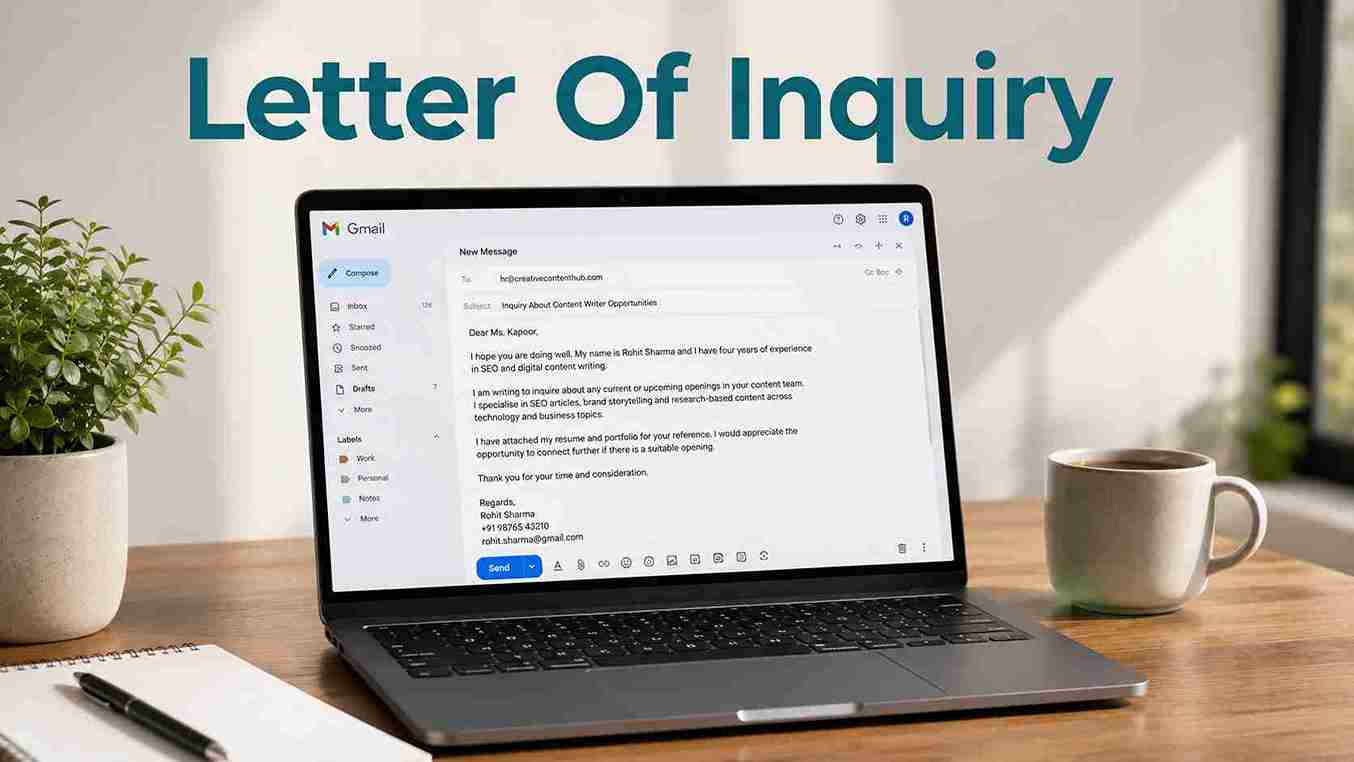
| Sub: Inquiry About Content Writer Opportunities Dear Ms. Kapoor, I hope you are doing well. My name is Rohit Sharma, and I have four years of experience in SEO and digital content writing. I am writing to inquire about any current or upcoming openings in your content team. I specialize in SEO articles, brand storytelling and research-based content across technology and business topics. I have attached my resume and portfolio for your reference. I would appreciate the opportunity to connect further if there is a suitable opening. Thank you for your time and consideration. Regards, Rohit Sharma [Email] |
2) Asking About Pricing
| Sub: Sample Inquiry Email For Pricing Dear Sir/Madam, I hope you are doing well. I am writing to inquire about the pricing and service details for your products. Please share your latest quotation, payment terms and any additional information that may help us evaluate your services. We would appreciate your response at your earliest convenience. Thank you for your time. Regards, [Name] [Contact] |
3) Potential Collaboration
| Dear Ms. Sharma, I hope you are doing well. My name is Tanya and I work as a Partnerships Manager at XYZ Media Solutions. I am reaching out to explore a potential collaboration between our organisations. We have been following your work in community outreach and digital campaigns, and we believe there could be exciting opportunities for us to work together on future projects and initiatives. Our team specializes in content strategy and brand campaigns, and we would love to discuss how both organisations can collaborate in a mutually beneficial way. Please let me know if you would be available for a short discussion sometime next week. Thank you for your time and consideration. I look forward to hearing from you. Regards, Tanya Partnerships Manager [MAIL ID] |
Common Mistakes To Avoid
A letter of inquiry should be professional, clear and personalized. Small mistakes in tone, formatting or content can reduce the chances of getting a response.
- Sending the same generic letter to every company
- Writing very long emails with unnecessary details
- Not mentioning a clear reason for contacting
- Using spelling or grammar mistakes
- Forgetting to add contact details or attachments
- Not sending follow-up email after sending the inquiry email
Tips For Writing An Letter Of Inquiry
A good letter of inquiry should be short, professional and easy to understand. The goal is to make a strong first impression and encourage the reader to respond.
- Keep the message short and to the point
- Personalize the email with the recipient’s name
- Clearly mention the purpose of writing
- Highlight relevant skills, experience or requirements
- Use a professional and polite tone
- End with a clear call to action
- Proofread before sending the email
Conclusion
Writing a letter of inquiry is not complicated. It is simply about being clear, being confident and reaching out before everyone else does. The professionals who get noticed are rarely the most qualified ones. They are the ones who showed up first, asked the right questions and made it easy to say yes.
So the next time you find yourself waiting for a job posting or a callback that never comes, write the letter. One well-timed, well-written inquiry can open a door that no application ever could.
FAQs
1. What is the difference between a letter of inquiry and a cover letter?
A cover letter is sent in response to a specific job posting. A letter of inquiry is sent proactively to explore opportunities that may not be advertised yet.
2. How long should a letter of inquiry be?
Ideally one page, around 250 to 400 words. It should be concise, focused and easy to read in under two minutes.
3. Can I send a letter of inquiry by email?
Yes, in most professional situations today, an inquiry letter sent by email is perfectly appropriate. Use a clear subject line and keep the format professional.
4. What should the subject line of an inquiry letter email say?
Keep it specific and direct. For example: “Inquiry About Content Writing Opportunities” or “Potential Collaboration Inquiry from XYZ Pvt. Ltd.”
5. How do I address a letter of inquiry if I do not know the recipient’s name?
Try to find the name through LinkedIn or the company website. If you genuinely cannot find it, use a role-based salutation such as “Dear Hiring Manager” or “Dear Marketing Team.”
6. Should I attach my resume to a letter of inquiry?
Yes, if you are inquiring about a job. It gives the recipient everything they need to evaluate your background without having to ask.
7. How soon should I follow up after sending a letter of inquiry?
Wait seven to ten business days before following up. A brief, polite email is the right approach. Do not call unless the letter explicitly invites it.
8. What is the tone of a letter of inquiry?
Professional, polite and purposeful, avoid being too casual or overly formal. Write as if you are speaking to a respected colleague you have not met yet.
9. Can a fresher write a letter of inquiry?
Absolutely, a fresher can highlight academic achievements, internship experience and relevant skills. The letter should focus on enthusiasm, potential and a genuine interest in the organisation.
10. What is the best time to send a letter of inquiry?
Mid-week, on a Tuesday, Wednesday or Thursday morning is ideal. Mondays are often busy and Fridays tend to get overlooked. Avoid sending during major holidays or at the end of the month when inboxes are crowded.






 Facebook
 Instagram
 Twitter




