


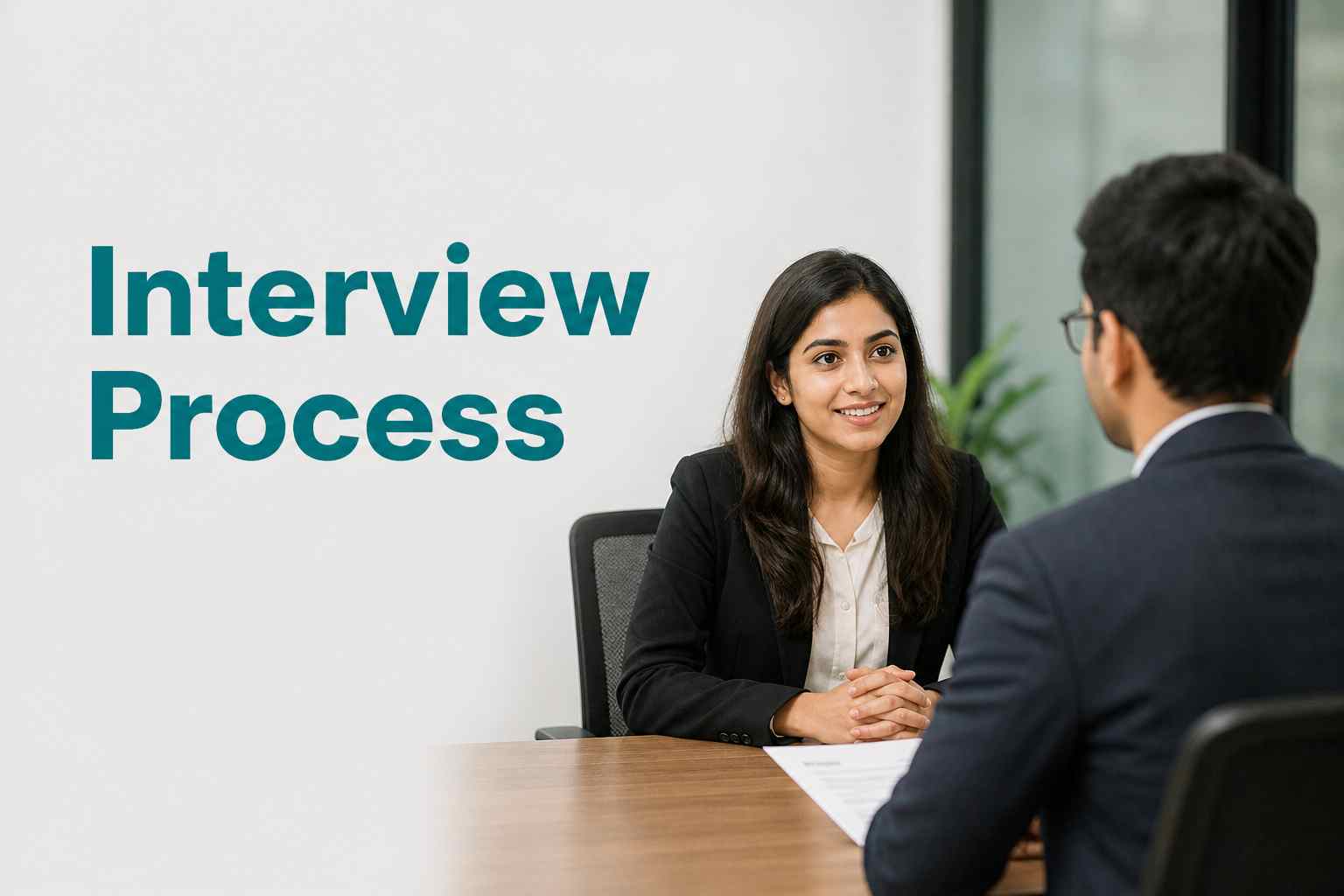
Picture this: You have applied for a job and you hear back. Or maybe you just got an email saying “We would love to schedule an interview with you.” Either way, there is an interview process that is about to take place.
Is it important? Well, yes! Whether you are applying for your first job or making a career switch, the interview process is one of the most important steps in your career journey. Knowing how it works gives you a real advantage over other candidates.
This guide walks you through everything you need to know about the interview process, from the very first screening call all the way to the final offer.
What Is An Interview Process?
The interview process is the structured, multi-step journey that companies use to find and hire the right person for a job. Think of it as a two-way conversation where the employer evaluates whether you are a great fit for the role, and you are also figuring out whether the company and position are right for you.
It begins right after you submit your job application and can include anything from a quick phone call to multiple rounds of interviews, skill tests, and even a meeting with senior leadership. The length and depth of the process depends on the company, the industry and the seniority of the role.
At its core, the interview process is designed to help employers move beyond a resume and truly understand who a candidate is. This includes their skills, experience, mindset and how well they would mesh with the team.
Key Stages Of An Interview Process
While every company structures things a little differently, most interview processes follow a similar path. Here is a breakdown of the typical stages you will encounter:
Stage 1: Application And Resume Screening
Before anyone calls you in, your resume gets reviewed first. Most companies today use an Applicant Tracking System (ATS) that scans applications for the right keywords and qualifications. This is exactly why matching your resume to the job description gives you a much better chance of getting noticed.
Once your application clears this stage, you move on to the next step.
Stage 2: The Initial Screening Via Phone Or Video Call
This is usually the first direct interaction you will have with the company HR or hiring personnel. A recruiter reaches out to you, most often via phone or a short video call, to have a brief conversation about your background, your interest in the role and your general availability.
This stage typically lasts 15 to 30 minutes and is designed to check whether you meet the basic requirements before investing time in a longer interview. Some common questions at this stage include: “Can you walk me through your experience?”, “Why are you interested in this role?“, and “What are your salary expectations?“
Pro Tip: Treat this call as seriously as any in-person interview. Be in a quiet place, have your resume in front of you and research the company beforehand.
Stage 3: The First Formal Interview
This is where things start to get more in-depth. The first formal interview is usually with the hiring manager and focuses on your qualifications, work history, skills and whether you would be a good cultural fit for the team.
Depending on the company, this could be a one-on-one conversation, a panel interview with multiple team members, or a video interview conducted on platforms like Zoom or Microsoft Teams. The interviewer is looking to understand not just what you have done, but how you think, communicate and handle challenges.
Stage 4: Skills Assessment Or Technical Interview
For many roles, especially in tech, finance, marketing, or content writing, you may be asked to complete a skills assessment. This could be a coding challenge, a case study, a writing test, a data exercise, or a role-play scenario.
This stage is not meant to trip you up. It is simply a way for employers to see your abilities in action, rather than just hearing about them. Approach it like you would in any practical task at work: carefully, methodically and with attention to detail.
Stage 5: The Second Interview
If you have impressed the interviewer in the first round, congratulations! You are now a serious contender. Second interviews are usually more comprehensive. You may meet with additional team members, senior management or cross-functional leaders.
At this stage, the employer already knows you can likely do the job. Now they are asking: “Is this the right person for our team, at this time?” Expect more situational and behavioral questions here.
Stage 6: The Final Interview
Not every role includes a final interview, but for senior, leadership, or highly specialized positions, this round typically involves conversations with top executives or department heads. The focus shifts from technical ability to things like strategic thinking, long-term vision and alignment with company goals.
This is also often the stage where compensation, benefits and logistics begin to be discussed.
Stage 7: Reference And Background Checks
Once the interviews are done and a candidate has been identified, most companies will conduct reference checks by reaching out to former managers or colleagues to verify your work history and gather insight into how you operate professionally.
Background checks may also be part of this stage, depending on the nature of the role.
Stage 8: The Job Offer
This is the exciting part, you know! If everything checks out, the employer extends a formal offer, usually in writing, that includes your salary, benefits, joining date and other key terms.
At this stage, do not be afraid to ask questions or negotiate if needed. A job offer is the start of a conversation, not the end of one.
Common Types of Interviews
Do you know? That not all interviews look the same. Here is a quick overview of the formats you might come across during your job search.
- Phone Interview: A brief, early-stage conversation to screen candidates. Great for remote or initial evaluations.
- Video Interview: Conducted over platforms like Zoom or Teams. Growing in popularity, especially for remote roles. Can be live or pre-recorded.
- In-Person Interview: The traditional face-to-face meeting. Still used for building personal connections and assessing communication style.
- Panel Interview: You are interviewed by a group of people including HR, hiring managers and team leads, all at once. They each bring a different lens to evaluating you.
- Behavioral Interview: Focuses on how you have handled past situations. Expect questions like “Tell me about a time when…” The STAR method (Situation, Task, Action, Result) is a great way to prepare.
- Technical Interview: Common in engineering, IT and data roles. Involves problem-solving, coding challenges, or domain-specific assessments.
- Case Study Interview: Often used in consulting, finance and strategy roles. You are given a business problem and asked to walk through your thinking process.
- Strength-Based Interview: Rather than focusing on past experiences, this format explores what you naturally enjoy and do well.
Why Does The Interview Process Matter?
The interview process is not just something that you “get through” with. It is actually one of the most valuable steps in your career journey.
For employers, a well-structured interview process helps them make smarter, more confident hiring decisions, reduce bias, and find candidates who genuinely fit both the role and the company culture.
For you as a candidate, it is your chance to showcase everything your resume could not fully capture, your personality, your problem-solving ability, your communication style, and your passion for the work.
The good news? Once you understand how the process works, it stops feeling like a mystery and starts feeling like an opportunity.
How Long Does The Interview Process Take?
This interview process varies from company to company. Some may move fast and you might go from application to offer in one or two weeks. Meanwhile others may have longer, more structured pipelines that can take four to six weeks or more.
The timeline often depends on the size and structure of the company, the seniority of the role, the number of interview rounds required and how quickly the hiring team can align on a decision. If you are waiting to hear back and it has been a while, it is completely fine to send a polite follow-up email expressing your continued interest and asking for an update on the timeline.
Tips To Ace Every Stage Of The Interview Process
- Do Your Research: Learn about the company, its culture, and recent news before the interview. Hiring managers always notice when a candidate comes prepared.
- Practice Your Responses: Go over common questions, especially behavioral ones, before the big day. It builds confidence and helps you communicate clearly under pressure.
- Prepare Thoughtful Questions: Always walk in with a few questions ready for the interviewer. It shows genuine interest and helps you evaluate if the role is right for you.
- Be Authentic: Speak naturally, share real examples, and let your personality come through. The best interviews always feel like honest conversations, not rehearsed performances.
- Follow Up After the Interview: Send a warm thank-you email within 24 hours of your interview. It is a small gesture that leaves a big and lasting impression.
- Manage Your Nerves: Take a few deep breaths before you begin and remind yourself that the interviewer wants you to do well. Focus on the conversation and let go of the pressure to be perfect.
What Employers Are Really Looking For
Beyond your resume and experience, most hiring managers are paying close attention to a few key things during interviews. Such as:
- Communication skills: Can you express yourself clearly and professionally?
- Problem-solving ability: How do you approach challenges?
- Cultural fit: Will you work well with the existing team?
- Motivation and enthusiasm: Are you genuinely excited about this role and company?
- Self-awareness: Do you understand your strengths and areas for growth?
Keep these in mind as you craft your responses and present yourself throughout the process.
Conclusion
The interview process might feel tiring at first, but once you understand how it works and what each stage is designed to do, it becomes a lot less overwhelming. It is a structured conversation, and like any other conversation, it goes better when you are prepared, present and genuinely yourself.
Whether you are stepping into your very first interview or returning after a long gap, remember: every stage of the process is a chance to learn more about yourself and what you want in your career. Walk in prepared, stay curious and trust that the right opportunity will find you.
Good luck – you have got this! 🚀
FAQs
1. How many rounds of interviews are normal?
Most hiring processes involve two to four rounds. The number depends on the company size and the seniority of the role.
2. What is the difference between a screening interview and a formal interview?
A screening interview is a short 15 to 30 minute call to check basic qualifications. A formal interview goes deeper into your skills, experience, and cultural fit.
3. How do I prepare for a behavioral interview?
Use the STAR method: Situation, Task, Action, and Result to structure your answers. Practice three to five real examples from your past work before the interview.
4. Is it okay to ask about salary during the interview process?
It is best to let the employer bring it up first, especially in early rounds. Salary discussions are completely normal and expected during the final stages.
5. What should I wear to a job interview?
Dress one level above the company’s everyday dress code to be safe. When in doubt, it is always better to be slightly overdressed than under-dressed.
6. How long should my answers be during an interview?
Aim for 60 to 90 seconds per answer. Keep it focused and the interviewer will ask if they want more detail.
7. What do I do if I do not know the answer to a question?
Be honest and walk through how you would approach the problem. Interviewers value clear thinking and honesty over a forced answer.
8. How soon should I follow up after an interview?
Send a thank-you email within 24 hours. If a decision deadline has passed, a polite follow-up email is completely appropriate.
9. Can I ask questions during the interview?
Yes, and you definitely should! Asking thoughtful questions shows genuine interest and helps you decide if the role is the right fit for you.
10. What happens if I do not get the job?
It simply means another candidate was a closer match at that moment. Ask for feedback, learn from the experience, and keep going.

 Facebook
 Instagram
 Twitter




