


Picture this: You got a call for an interview. The HR sent you an email with all the details. You read it, felt excited and then… closed it without replying. Sound familiar?
Most people don’t realize that how you respond to a professional email says just as much about you as your resume does. A simple acknowledgement can set you apart even before you walk into the room.
In this blog, you will learn what an acknowledgement email reply is, why it is important, the correct format to follow, and ready-to-use samples.
What Is An Acknowledgement Email Reply?
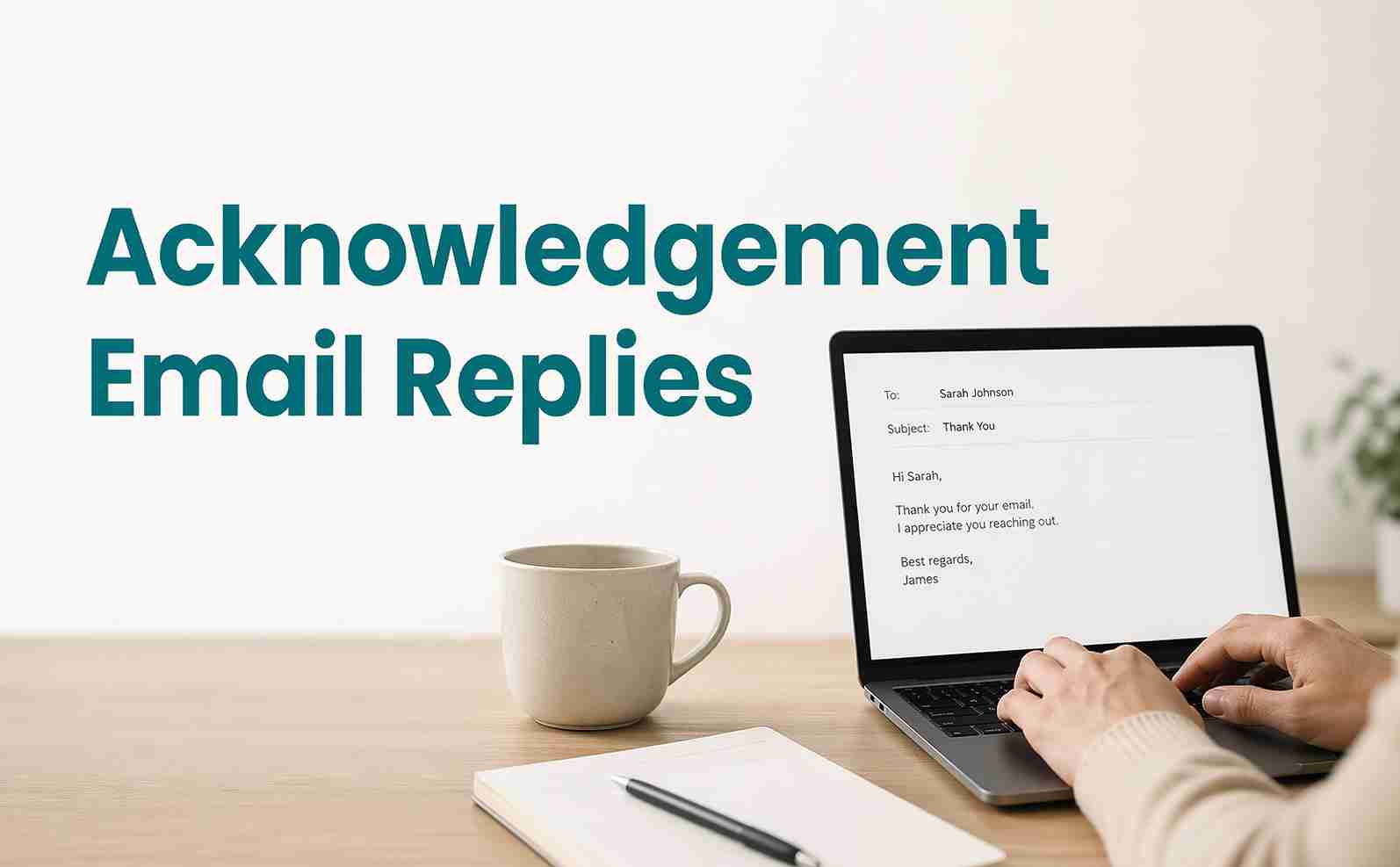
An acknowledgement email is a short, polite message sent to confirm that an email has been received. It is not a detailed response. It simply lets the sender know that their message has reached you and will be acted upon. It can be sent for an interview call, a job offer, a work assignment, a client query, or any other formal communication.
It does not need to be long or complicated. Just a few clear and professional lines are enough. Think of it as a small but important habit that keeps communication smooth, avoids unnecessary follow ups, and shows the other person that you value their time.
Importance Of An Acknowledgement Email Reply
Before we get into how to write an acknowledgement email reply, let us understand why it matters.
- It shows you are professional and responsible
- It confirms the other person that their message was received
- It avoids confusion or delays in communication
- It creates a good first impression, especially in a job application process
- It keeps a written record of the conversation
In a professional setup, acknowledging emails on time is considered a basic practice. And hey! employers notice it.
Format Of An Acknowledgement Email Reply
A good acknowledgement email has five simple parts:
1. Subject Line
Keep it clear. If you are replying to an existing email, just hit “Reply” – the subject line carries over automatically. If you are writing fresh, write something like: “Acknowledgement – Interview Invitation | [Your Name]”.
Always address the person by name. “Dear Mr. Sharma,” or “Hello Priya,”.
3. Acknowledgement Line
Confirm you received the email. “Thank you for reaching out. I have received your email and noted all the details.”
4. Body (Optional)
Add any short information if needed, like confirming your availability or mentioning you will respond in detail shortly.
End professionally. “Warm regards,” or “Best regards,” Then your name and contact details.
Ready-To-Use Acknowledgement Email Samples
Sample 1 – Acknowledging A Job Interview Call
| Subject: Interview Confirmation – [Job Role] Dear [HR Name], Thank you for sharing the interview details. I have received your email and would be happy to attend the interview for the [Job Role] position. I am available on [Date and Time]. Please let me know if anything else is required from my side. Looking forward to speaking with you. Best regards, [Your Name] [Phone Number] |
Sample 2 – Acknowledging a Job Offer Letter
| Subject: Offer Letter Received – [Job Title] Dear [Hiring Manager’s Name], Thank you for sharing the offer letter for the [Job Title] role. I have received it and will go through the details carefully. I will get back to you with my response by [Date]. Thank you once again for the opportunity. Warm regards, [Your Name] |
Sample 3 – Acknowledging a Work Email From Your Manager
| Subject: Re: [Original Email Subject] Dear [Manager’s Name], Got your email, thank you. I have noted the details and will make sure the task is completed by [Deadline]. Please let me know if there is anything else you would like me to include. Best regards, [Your Name] |
Sample 4 – Acknowledging a Client Email
| Subject: Re: [Project Name / Query] Dear [Client Name], Thank you for your email. I have received your request and will review it shortly. I will share a detailed update with you by [Date/Time]. Best regards, [Your Name] [Designation] [Company Name] |
Sample 5 – Acknowledging a Complaint Email
| Subject: Complaint Received – We are Looking Into It Dear [Customer Name], Thank you for bringing this to our attention. We have received your complaint and are currently reviewing the issue. Our team will get back to you with an update within [X working days]. We appreciate your patience. Regards, [Your Name] [Customer Support Team] |
Skills Required To Write Good Acknowledgement Emails
Writing professional emails is a skill that employers actually look for. Here is what you need:
1. Basic Writing Skills: No spelling mistakes, no grammar errors. Keep it simple and clear.
2. Professional Tone: Even if the email is short, the tone must be formal and respectful. Avoid casual language like “yeah sure” or “noted, bro.”
3. Time Management: Acknowledge emails quickly, ideally within a few hours or at most within 24 hours of receiving them.
4. Attention To Detail: Read the email properly before replying. Make sure you address all the key points mentioned.
5. Basic Computer And Email Literacy: If you are new to email, start by learning how to create and use a professional email account before anything else.
These skills are part of broader written communication abilities that are highly valued in every industry.
Conclusion
Writing an acknowledgement email reply may seem like a small step, but it creates a strong professional impression. It shows reliability, respect, and a serious approach to work, whether it is for a first job or daily communication in a current role.
With regular practice, it becomes quick and natural. The samples above can be used as a base and adjusted for different situations, helping build better communication habits over time.
FAQs
Q1. What is an acknowledgement email reply?
It is a short and professional email sent to confirm that a message has been received. It reassures the sender that their email has reached you and will be acted upon.
Q2. How quickly should an acknowledgement email be sent?
Ideally, it should be sent within a few hours. The maximum acceptable time is within 24 hours. For urgent emails, it is best to respond as soon as possible.
Q3. Is it necessary to acknowledge every email?
Not every email requires a reply, but important ones should always be acknowledged. This includes job offers, interview calls, work assignments, and client queries. Casual emails or newsletters usually do not need a response.
Q4. What should be written in an acknowledgement email for a job offer?
Keep it simple and clear. Thank the sender for the offer, confirm that it has been received, and mention when a final decision will be shared.
Q5. Can an acknowledgement email be written in Hindi or a mixed language?
In professional settings, it is always better to use English. Hindi or mixed language may be acceptable in informal internal communication, but for HR, clients or official emails, English should be preferred.
Q6. What is the difference between an acknowledgement email and a reply email?
An acknowledgement email confirms that a message has been received, while a reply email provides detailed information or answers. In some cases, an acknowledgement can be sent first, followed by a detailed response later.
Q7. How should a job rejection email be acknowledged?
It should be handled politely and professionally. Thank the sender for the opportunity and express appreciation for their time. This helps maintain a positive impression for future opportunities.
Q8. What should be done if the email is not fully understood?
It is still important to acknowledge it. Confirm receipt and mention that the email will be reviewed carefully, and any questions or clarifications will be shared soon.
Q9. Should attachments be included in an acknowledgement email?
In most cases, no. These emails are meant to confirm receipt. Attachments should only be included if they are specifically requested.
Q10. How can a fresher write a professional acknowledgement email?
A fresher can follow a simple structure with a polite greeting, clear confirmation of receipt, and a professional closing. A well written email reflects maturity, regardless of experience.






 Facebook
 Instagram
 Twitter




