


India’s automobile industry is one of the largest in the world and it keeps growing every year. From electric vehicles to heavy trucks, every vehicle on the road exists because of a team of skilled people who design, test, build and maintain it. Automotive engineering sits right at the heart of all of this. If you love machines, enjoy problem solving and want a career that will always be in demand, this blog is for you.
Whether you are a student trying to pick the right course or an automotive engineering fresher, this will walk you through everything you need to know about automotive engineering, from what it actually means to how much you can earn and the career scope it holds.
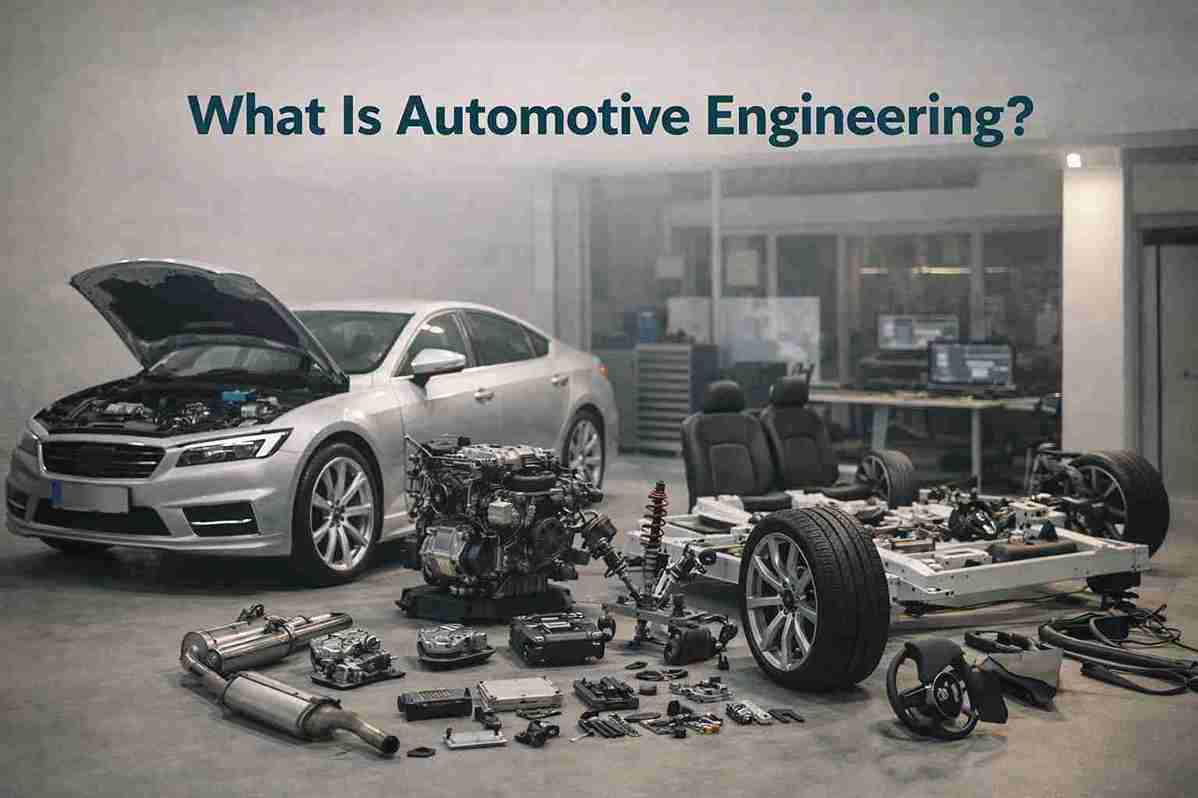
What Is Automotive Engineering?
Automotive engineering is all about how vehicles are made and how they work. It includes everything from designing cars and bikes to testing them and making sure they run safely on the road. This field brings together ideas from mechanical, electrical and software engineering to build vehicles that are efficient, comfortable, and reliable. In simple terms, automotive engineers ensure that your vehicle starts smoothly, stops safely and performs well every day.
Automotive engineering is not just a one task job, it includes different roles like designing vehicles, improving engines, checking quality and testing performance. Some engineers work on speed and power, while others focus on saving fuel or reducing pollution. With the rise of electric vehicles in India, many automotive engineers are now also working on batteries and electric systems, making this field even more exciting and future-focused.
What Does An Automotive Engineer Do?
Automotive engineers work across different stages of a vehicle’s lifecycle, depending on their role. Some design car parts and systems using software, while others work in factories to ensure smooth production. There are also testing engineers who check vehicles in tough conditions to find and fix problems, as well as R&D engineers who focus on future technologies and innovations.
In India, automotive engineers find opportunities in companies like Tata Motors, Mahindra & Mahindra, Maruti Suzuki and Hyundai Motor India. They can also work in auto component firms, testing labs, research organizations and government bodies.
Education Required To Become An Automotive Engineer
There is no single path to becoming an automotive engineer, but having the right qualifications can make a significant difference when you are looking for good job opportunities.
Option 1: After 10th Pass
After completing Class 10, you can pursue an ITI (Industrial Training Institute) course in automobile engineering or a related field. This takes about one to two years and gives you hands-on technical skills. It is a good starting point for workshop and technician level roles.
Option 2: After 12th Pass (Science Stream)
If you have studied Physics, Chemistry and Maths in Class 12, you can appear for JEE or state level engineering entrance exams and get admission to a B.E. or B.Tech in Automobile or Mechanical. This is a four year degree programme and it is the most common path for those who want core engineering roles.
Option 3: Diploma In Automobile Engineering
A diploma degree course in automobile engineering after Class 10 or 12 is a three year programme offered by colleges having vocational and technical courses. It covers subjects like vehicle systems, engine technology, electronics and manufacturing. Many diploma holders start as junior engineers or technicians and grow from there.
Option 4: Postgraduate Courses
After completing your B.Tech, you can do M.Tech in Automobile Engineering, Vehicle Dynamics, Thermal Engineering, etc. This is useful if you want to get into research, teaching or highly specialized technical roles.
Skills Required In Automotive Engineering
Technical knowledge alone is not enough to build a successful career in the field of Automotive Engineering. Employers look for a combination of hard skills and soft skills.
1. Technical Skills: Understanding how vehicle systems work, including engines, transmission, braking, steering and suspension, is the foundation. You should also know how to use CAD software like AutoCAD, CATIA or SolidWorks for design work. Familiarity with computer diagnostics tools is increasingly important because modern vehicles are full of electronic sensors and software. Knowledge of materials science, thermodynamics and manufacturing processes is also expected.
2. Analytical And Problem Solving Skills: When a vehicle part fails or a design does not perform as expected, engineers need to diagnose what went wrong and find a practical solution. This requires logical thinking and attention to detail.
3. Communication Skills: Engineers often have to explain technical issues to non technical people such as managers, clients or factory workers. Being clear and confident in your communication matters.
4. Team Work: Automotive projects involve large teams. Designers, manufacturers, quality teams and testers all have to work together. Being a good team player is just as important as being technically skilled.
5. Adaptability: With electric vehicles, hybrid technology and self-driving systems becoming more mainstream, automotive engineers have to keep learning. Those who stay updated with new technology tend to move ahead faster in their careers.
Salary Of An Automotive Engineer
| Level / Role | Experience | Average Salary Range |
| Freshers (B.Tech / BE) | 0-2 years | ₹2.5 LPA – ₹4 LPA (up to ₹6 LPA+ in top companies) |
| Mid-Level Engineers (Design, Testing, Quality) | 3-6 years | ₹5 LPA – ₹10 LPA |
| Senior Engineers / Team Leads | 7+ years | ₹12 LPA – ₹20 LPA+ |
| Technicians / Diploma Holders | Entry to experienced | ₹15,000 – ₹40,000 per month (can go higher with experience) |
Also, cities like Pune, Chennai, Gurugram, Bengaluru and Mumbai tend to offer higher pay because most major automotive companies and R&D [Research & Development] centres are located there.
Career Scope In Automotive Engineering
The career scope in automotive engineering in India is genuinely strong. India is the third largest automobile market in the world currently and the government’s push for electric vehicles under initiatives like FAME India means there are newer, more specialized jobs being created every year. Here are some of the career paths you can take after studying automotive engineering:
- Vehicle Design Engineer: Handles the look and structural design of a vehicle. They use 3D modelling software to create components and full vehicle layouts.
- Powertrain Engineer: Works on the engine, gearbox and drivetrain systems that move the vehicle.
- Testing And Validation Engineer: Runs the vehicle through performance, safety and durability tests to make sure it meets standards before launch.
- Manufacturing Engineer: Focuses on the production process, making sure vehicles are assembled correctly and efficiently on the factory floor.
- Quality Control Engineer: Monitors production to catch defects and ensure the final product meets quality standards.
- EV And Battery Engineer: It is a newer and rapidly growing role focused on electric vehicle systems, battery management and charging technology.
- Service And After Sales Engineer: Works at dealerships or service centres helping customers with maintenance and repairs.
There is also good scope in roles like R&D engineer, NVH (noise, vibration and harshness) engineer, aerodynamics engineer and embedded systems engineer for connected and self-driving, driver-less or robotic vehicles.
Tips To Start As An Automotive Engineer
- Gain Hands-on Experience Early: Do internships in workshops or automobile companies during your course
- Build A Strong, Clear Resume: Highlight technical and projects, tools, and practical skills
- Stay Updated With Industry Trends: Focus on EVs, automation, and connected vehicles
- Learn Tools And Certifications: CAD software for designing and automotive tools add strong value
- Apply Actively On Trusted Platforms: Use apps like Job Hai to find verified openings quickly
Conclusion
Automotive engineering is a strong career choice for anyone interested in how vehicles work and improve over time. Whether it is designing new cars or working as a skilled mechanic, there are opportunities at every level if the basics are strong and skills are practical.
Start with the right course or training, keep learning and focus on real experience. When ready, explore jobs on platforms like Job Hai to find verified opportunities easily.
FAQs
1. What is the difference between automotive engineering and mechanical engineering?
Mechanical engineering is a broad field that covers machines, energy and manufacturing. Automotive engineering is a specialized part of it focused only on vehicles. It deals specifically with designing and improving cars, bikes and other automobiles.
2. Is automotive engineering a good career in India?
Yes, it is a growing and stable career option. India has a strong automobile industry and is also expanding in electric vehicles. This creates continuous demand for skilled engineers and technicians.
3. Can I become an automotive engineer after a diploma?
Yes, a diploma is a valid starting point. You can work as a technician or junior engineer and gain experience. Later, you can also pursue B.Tech through lateral entry to grow further.
4. What is the starting salary for a fresher?
B.Tech graduates usually start between ₹2.56 LPA depending on the company and college. Diploma and ITI candidates typically earn ₹15,000-₹25,000 per month. Salary increases with skills and experience.
5. Which city is best for automotive jobs in India?
Pune and Chennai are major automotive hubs with many companies and factories. Gurugram, Bengaluru and Mumbai also offer good opportunities, especially in EV and R&D roles.
6. Does automotive engineering have a future with electric vehicles?
Yes, the future is strongly linked to electric vehicles. New roles are emerging in battery technology, electric motors and vehicle software. Engineers with EV skills are in high demand.
7. How many years does it take to study automotive engineering?
ITI courses take 1-2 years, while a diploma takes 3 years. A B.Tech degree takes 4 years after Class 12. You can also add 2 more years for M.Tech if you want specialization.
8. What subjects are important in automotive engineering?
Core subjects include thermodynamics, engines, vehicle dynamics, and manufacturing. You will also study electronics and CAD tools. New courses also include EV and hybrid vehicle technologies.
9. Can women build a career in automotive engineering?
Yes, absolutely. Many women are working in design, testing, R&D and software roles in top companies. The industry values skills and knowledge, making it open and inclusive.
10. Is there scope without a degree?
Yes, ITI and diploma holders can build strong careers as technicians and service engineers. With experience and certifications, many professionals grow into higher roles. Practical skills matter a lot in this field.






 Facebook
 Instagram
 Twitter




